Bulgaria: The Art of Zhen-Shan-Ren Resonates in Ruse
(Minghui.org) The Art of Zhen-Shen-Ren exhibition opened in Ruse, Bulgaria on January 16, 2026. The exhibition features a collection of 28 oil paintings, all created by practitioners of Falun Dafa (also called Falun Gong) who escaped or survived the Chinese Communist Party’s (CCP) religious persecution.
Ruse is the hometown of Elias Canetti, who won the Nobel Prize in Literature in 1981. It is Bulgaria’s sixth-largest city and one of the country’s cultural centers, featuring a colorful artistic sphere that bridges music, performing arts, fine arts, and literature. The city’s buildings boast a variety of architectural styles, from Gothic to Neoclassical, each one showcasing a time in Ruse’s rich historical past.
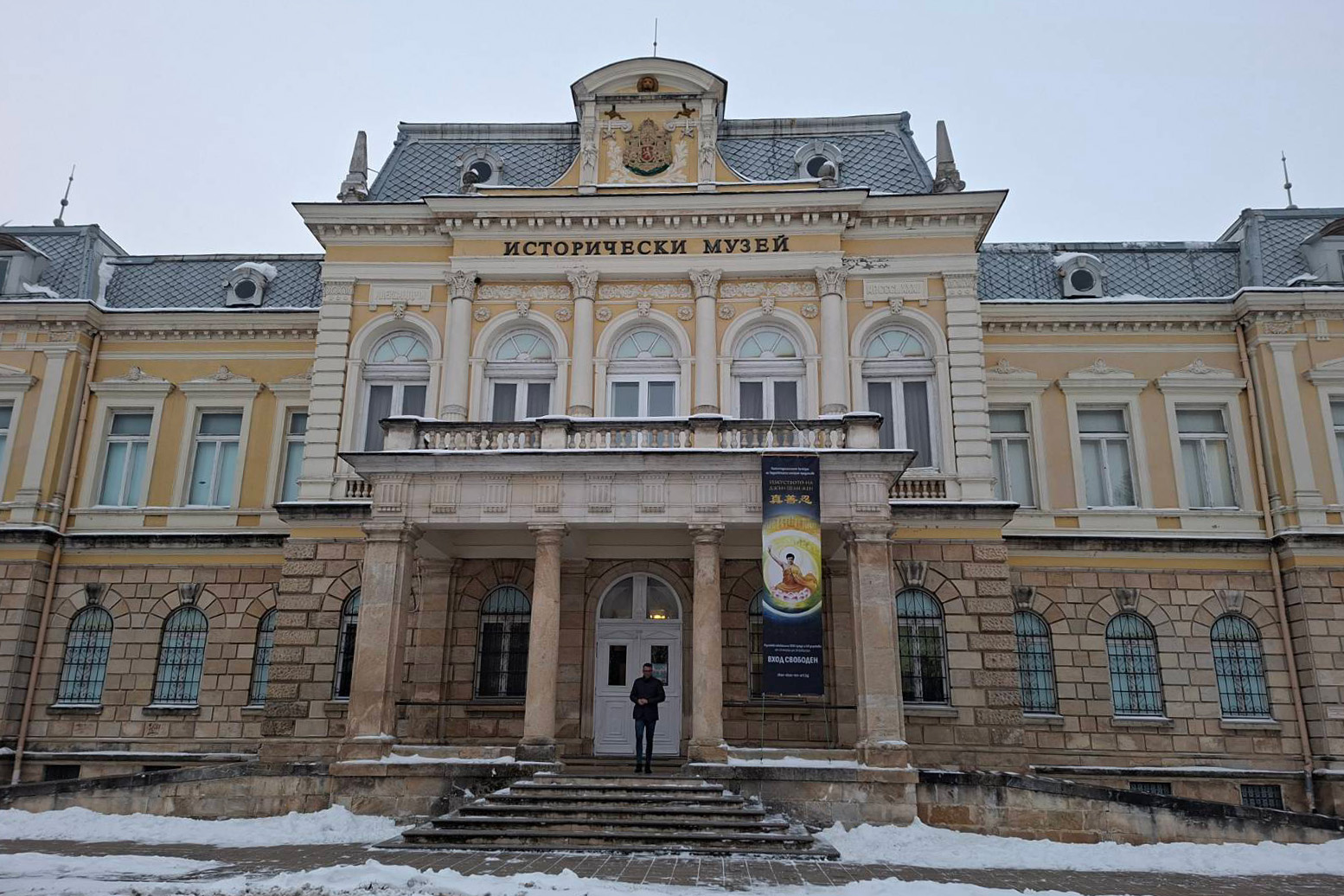 The Art of Zhen-Shen-Ren exhibition was held in the Ruse Regional Historical Museum.
Ruse’s vibrant urban aesthetic, along with its position on the Danube River, has earned it the nickname “Little Vienna” and made it a gathering place for artists and creatives throughout the region.
The exhibition is housed in the Regional History Museum in Ruse, also known as the “Battenberg Palace.” It is one of the city’s most impressive buildings and the oldest building still standing from the Neoclassical Period.
The exhibition’s official opening ceremony was held on January 16, in the middle of a lengthy cold spell that gripped the city. Senior administrative officials, university professors, public figures, journalists, and citizens, as well as specialists and museum staff, attended the event to show their support.
The exhibition coordinator, Martin Garchev, welcomed visitors and talked about why the exhibition was held, its themes, and the messages conveyed by the paintings.
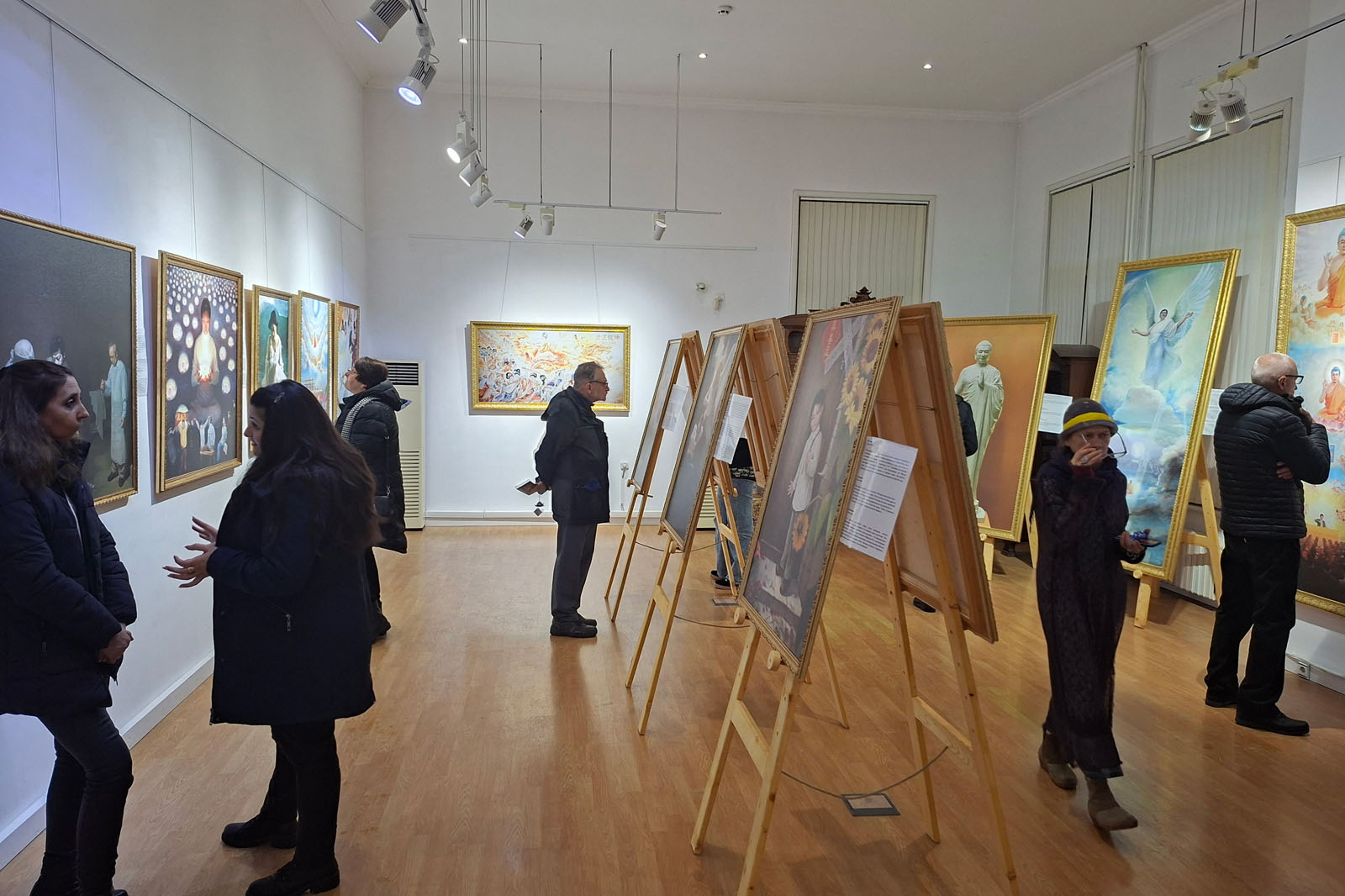
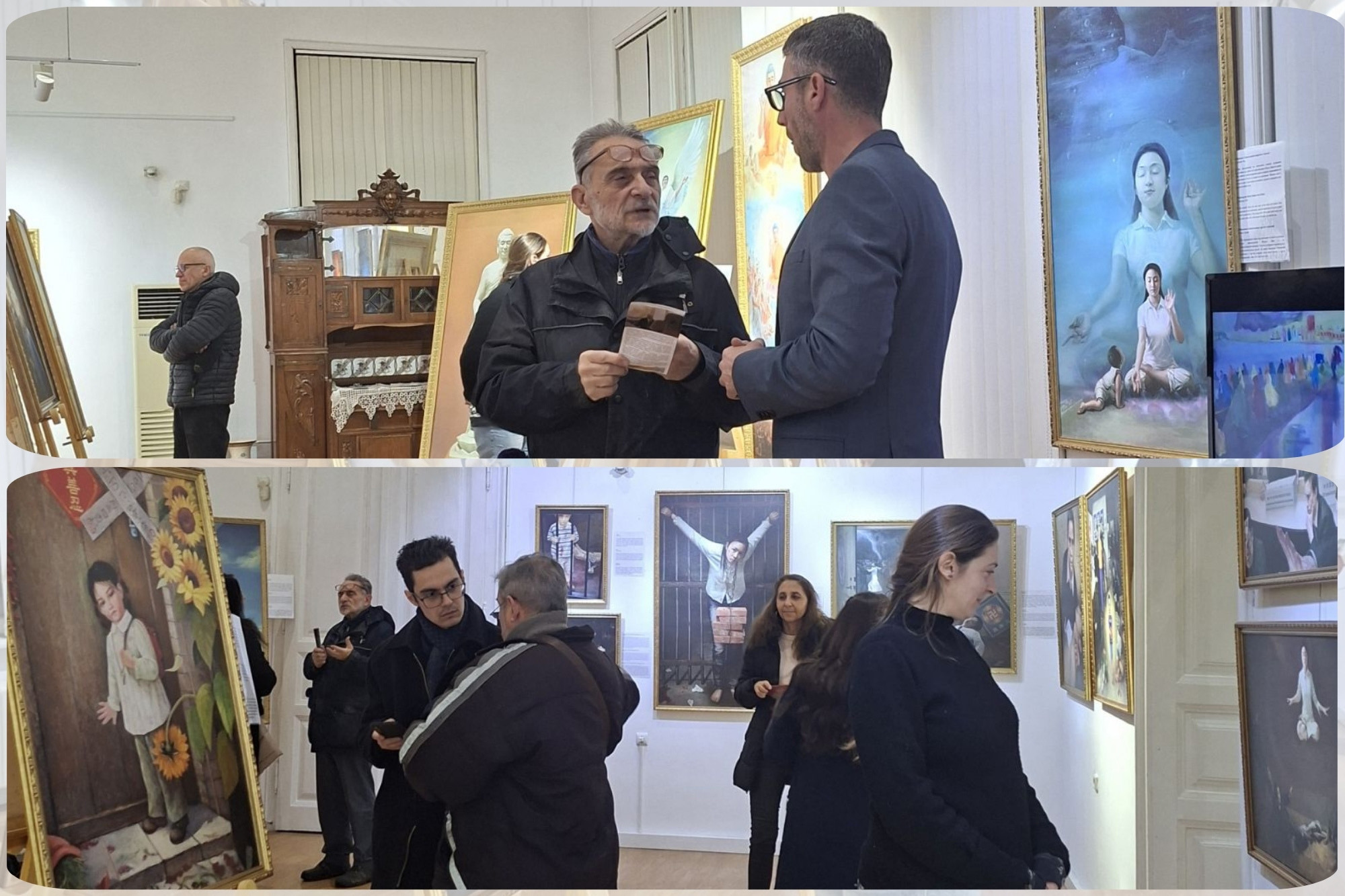
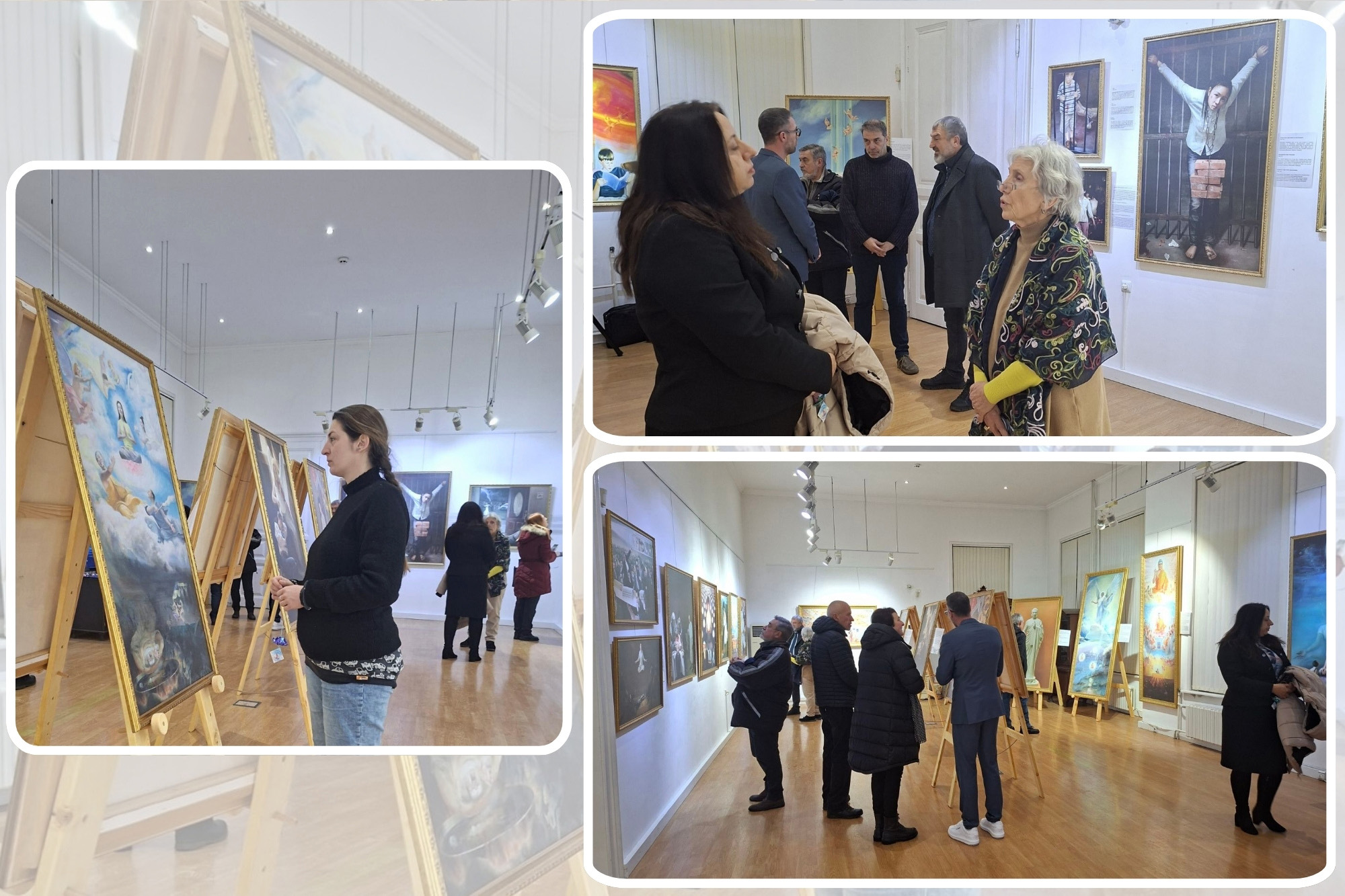 Visitors view Art of Zhen-Shen-Ren exhibition in Ruse, Bulgaria.
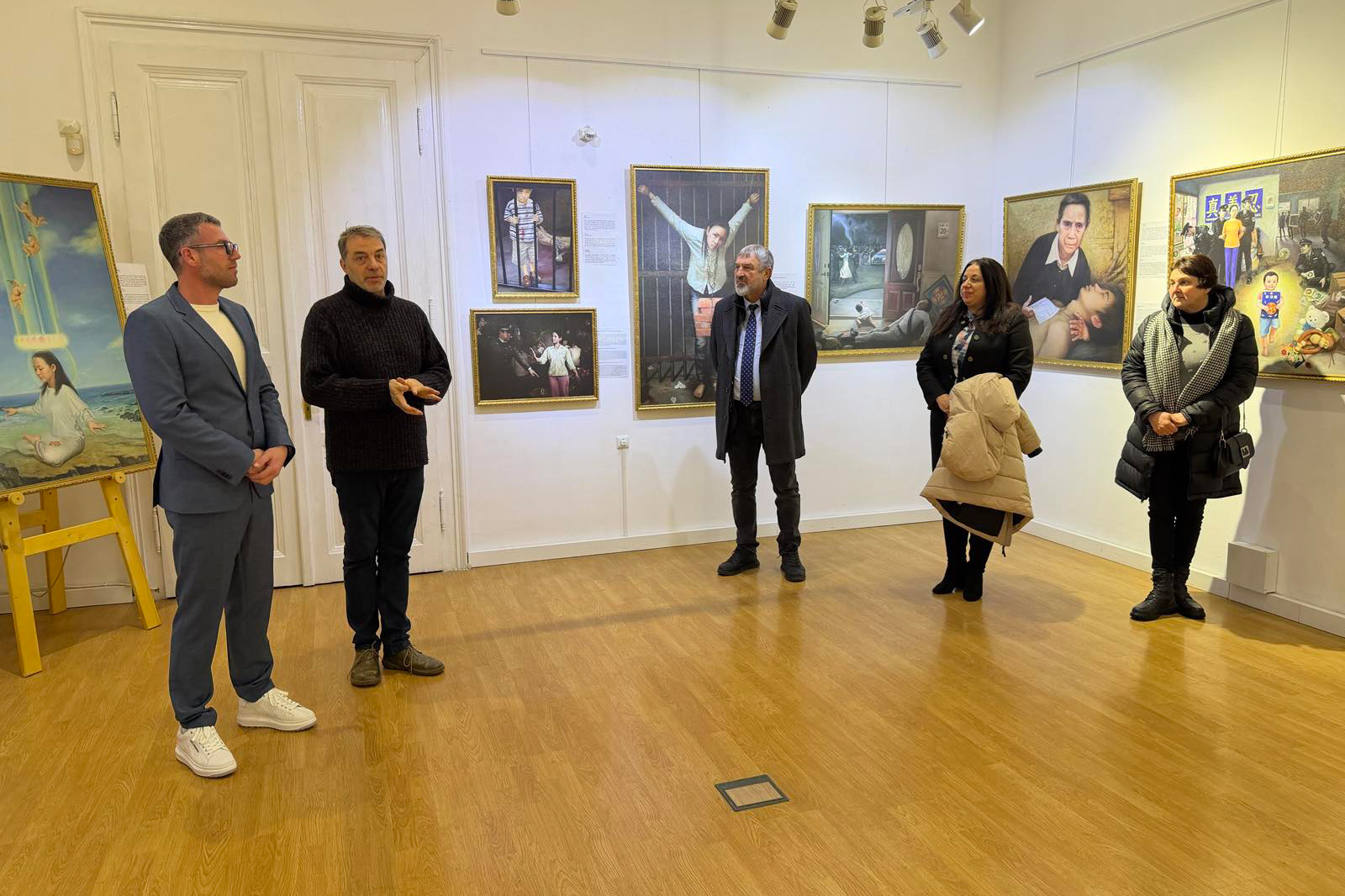 From left to right: Martin Garchev, Prof. Nikolay Nenov, PhD–Director of the Historical Museum, Mr. Dragomir Draganov–Regional Governor, Assoc. Prof. Galina Ivanova, PhD–Vice-Rector of Ruse University
A Collection That “Provokes Critical Thinking”
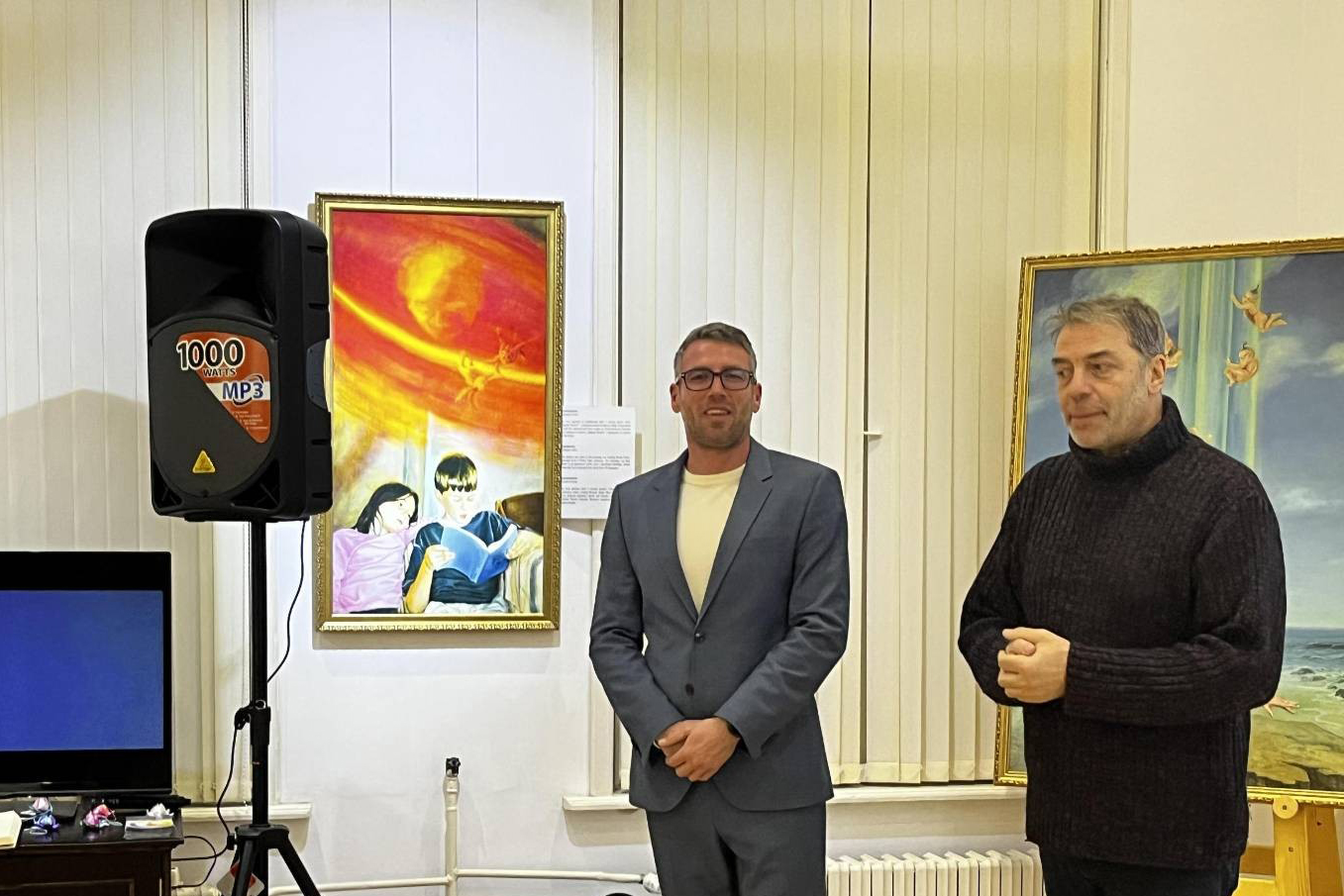 Martin Garchev, the exhibition’s organizer (left) and Prof. Nikolay Nenov (right)
Prof. Nikolay Nenov, PhD, the director of the Regional History Museum, was very supportive of displaying the paintings from the Art of Zhen-Shan-Ren at his institution. He said the exhibition represents one of the rare examples of art that provokes critical thinking in society, referring to the paintings’ depictions of both the power and beauty of Falun Dafa’s spirituality and the strength of practitioners in the face of persecution.
“Museums around the world, as we can see through this exhibition, actually touch upon current moments in the life of society, and the examples we see through the exhibition show precisely this need for human empathy,” said Prof. Nenov.
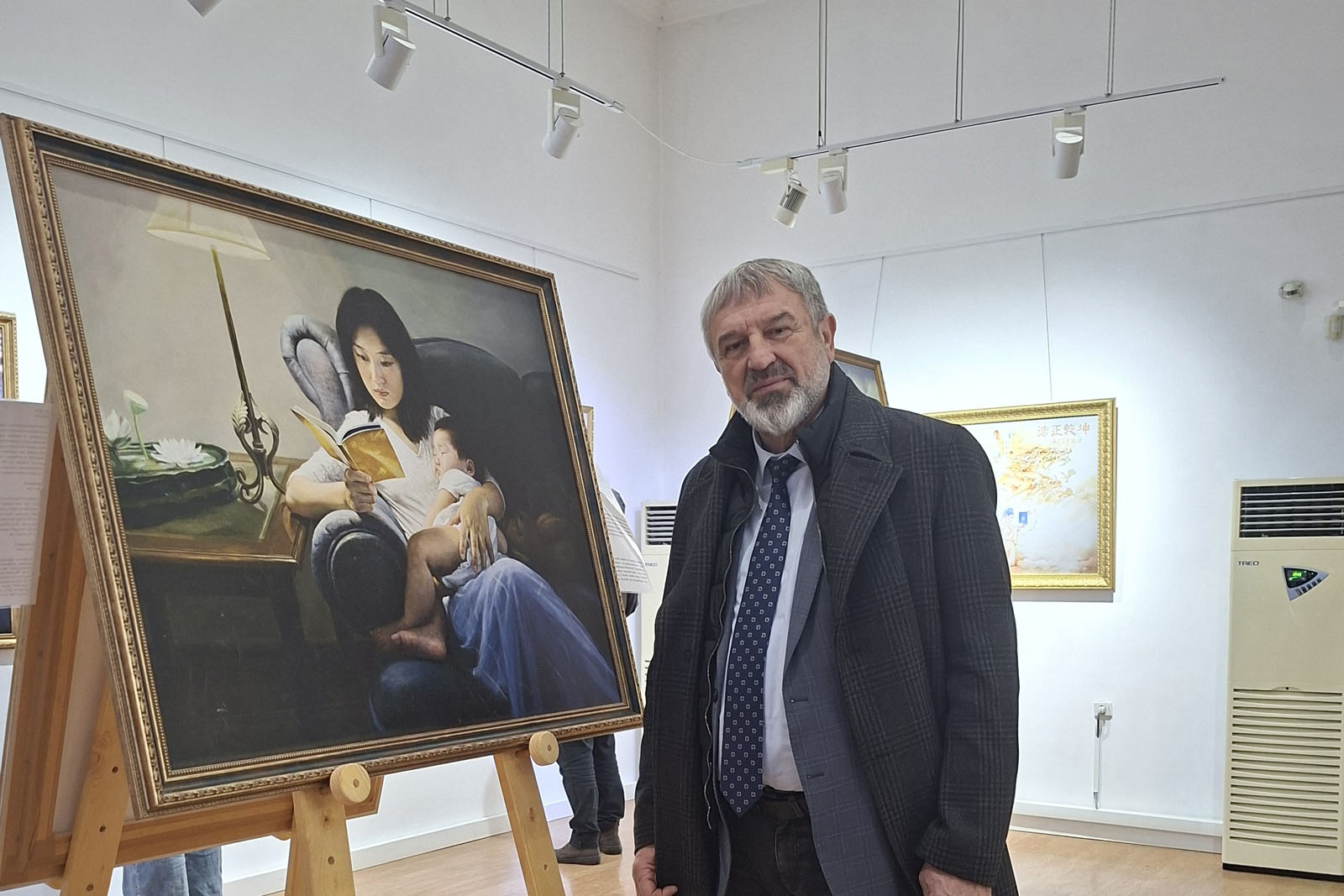 Dragomir Draganov, Regional Governor, next to the painting Illumination by Xiaoping Chen
After viewing the paintings, the Regional Governor of Ruse, Dragomir Draganov, remarked, “This exhibition is a space for reflection and encounter with these values through the language of art. Each work here is proof that values can be experienced, felt, and shared—not as slogans, but as living experiences.”
He feels these are not abstract concepts, but a “moral compass” that determines the direction of our lives. “The three values [Truthfulness, Compassion, and Forbearance] complement and reinforce each other. Truth without kindness can hurt, kindness without truth loses direction, and without patience, neither of them can be established over time,” Mr. Draganov said.
He also spoke about the importance of defending society, as the exhibition raises this issue as well.
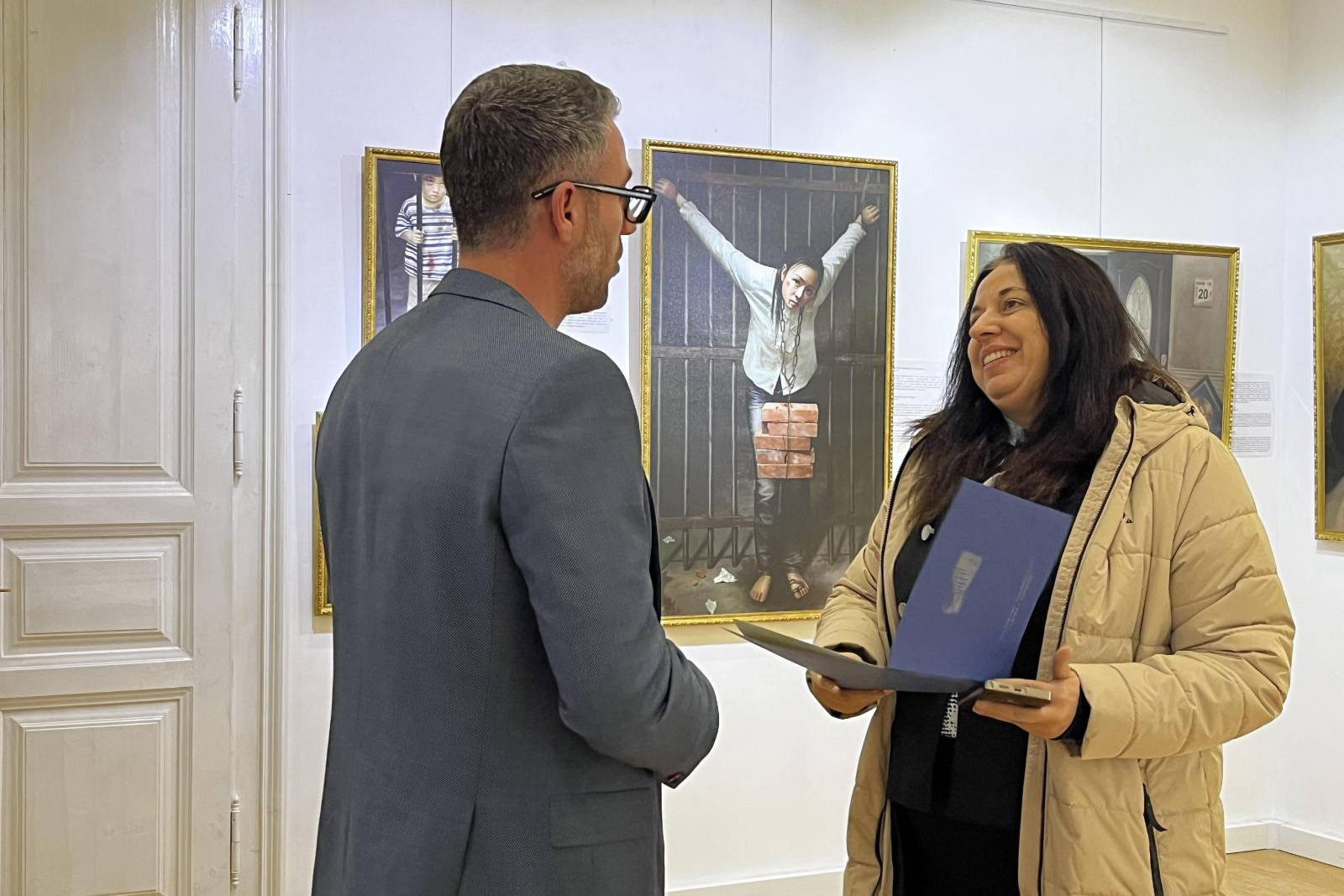
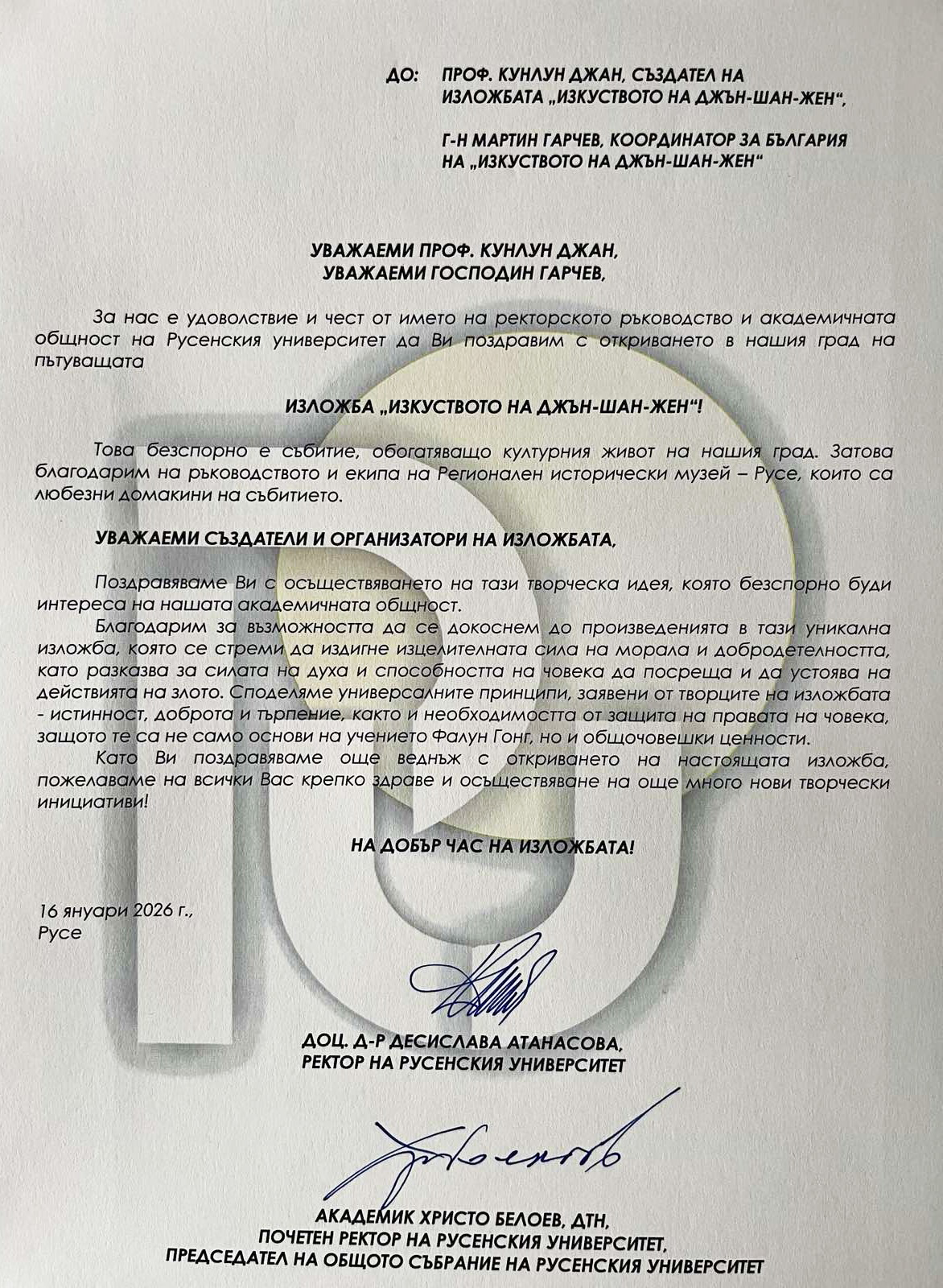 Assoc. Prof. Ivanova presents the congratulatory address.
The Vice-Rector for International Cooperation at Angel Kanchev University of Ruse, Assoc. Prof. Galina Ivanova, said that the exhibition enriches the cultural life of the city and that, “The realization of this creative idea undoubtedly arouses the interest of our academic community.”
Assoc. Prof. Ivanova was a special envoy of Assoc. Prof. Desislava Atanasova, Rector of Angel Kanchev University of Ruse, and of the Honorary Rector, Academician Hristo Beloev, PhD. She presented a congratulatory address to the coordinator of The Art of Zhen-Shan-Zhen exhibition on Prof. Atanasova’s behalf.
“We share the universal principles expressed by the creators of the exhibition—Truthfulness, Compassion, and Tolerance—as well as the need to protect human rights, because they are not only the foundations of Falun Gong, but also universal human values,” the congratulatory message reads.
Visitors Explore the World of Zhen-Shan-Ren
Many people visited the museum and learned the persecuted artists’ stories.
The Kolevi family from Razgrad visited Ruse for work on Saturday. They learned about the exhibition when they happened to encounter one of the volunteers for the exhibition.
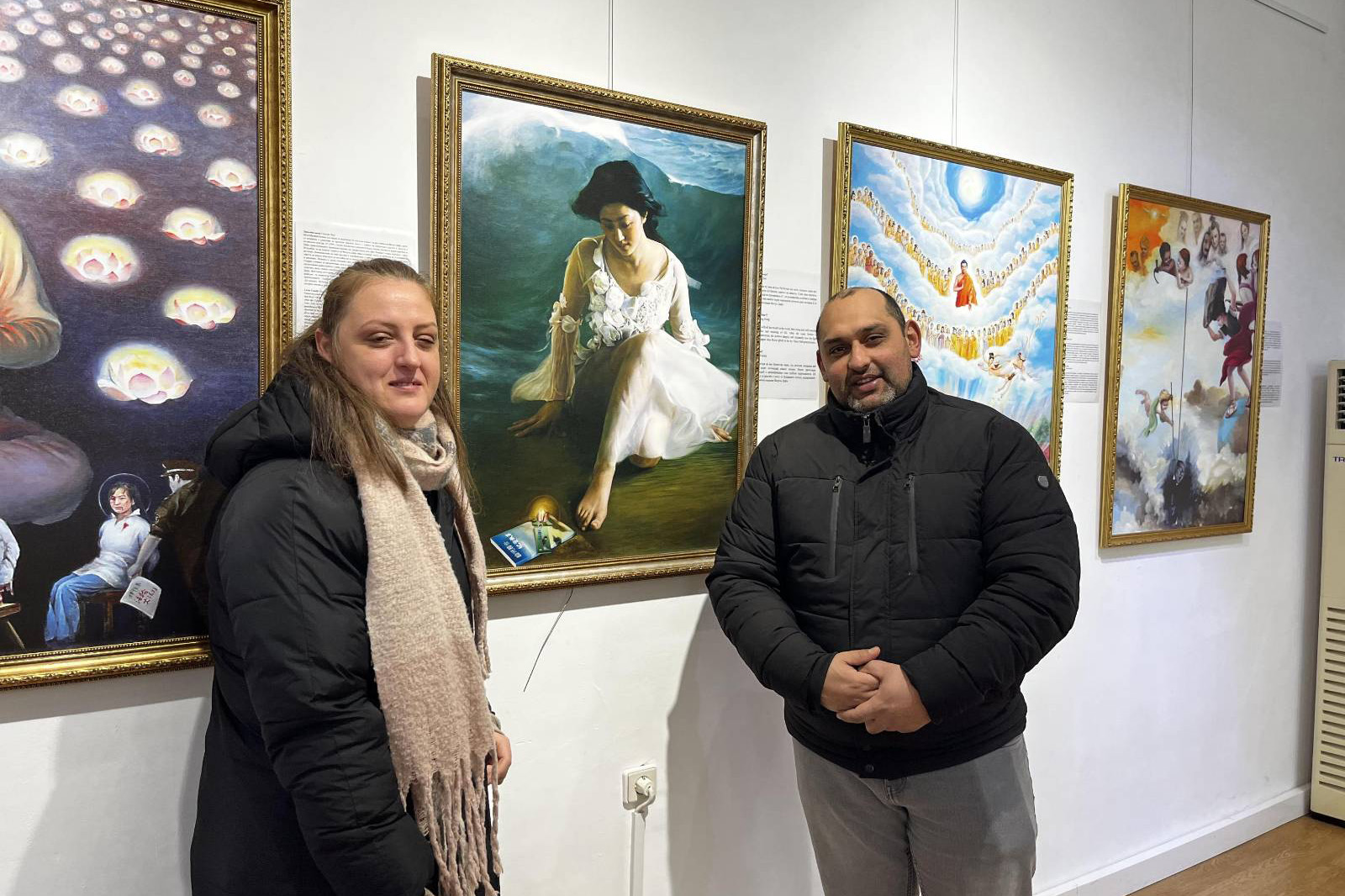 Mr. and Ms. Kolevi in front of the painting Who Am I?
Mr. and Ms. Kolevi visited the exhibition and heard how Falun Dafa is being persecuted in China. They learned about the violence that the Chinese Communist Party has perpetrated on practitioners for the past 26 years as well as their peaceful resistance to repression and that the exhibition was part of that peaceful resistance. They saw the power of spirit and faith reflected in the paintings and were interested in learning more about Falun Dafa.
Referring to a painting that made the strongest impression on them, Ms. Kolevi said the painting Who Am I? which had the description: “... the young woman who has everything but is still searching for the true meaning of life.”
Before they left, Ms. Kolevi wrote in the guestbook, “A way for people to seek spirituality through the prism of the world around us! Thank you!!!”
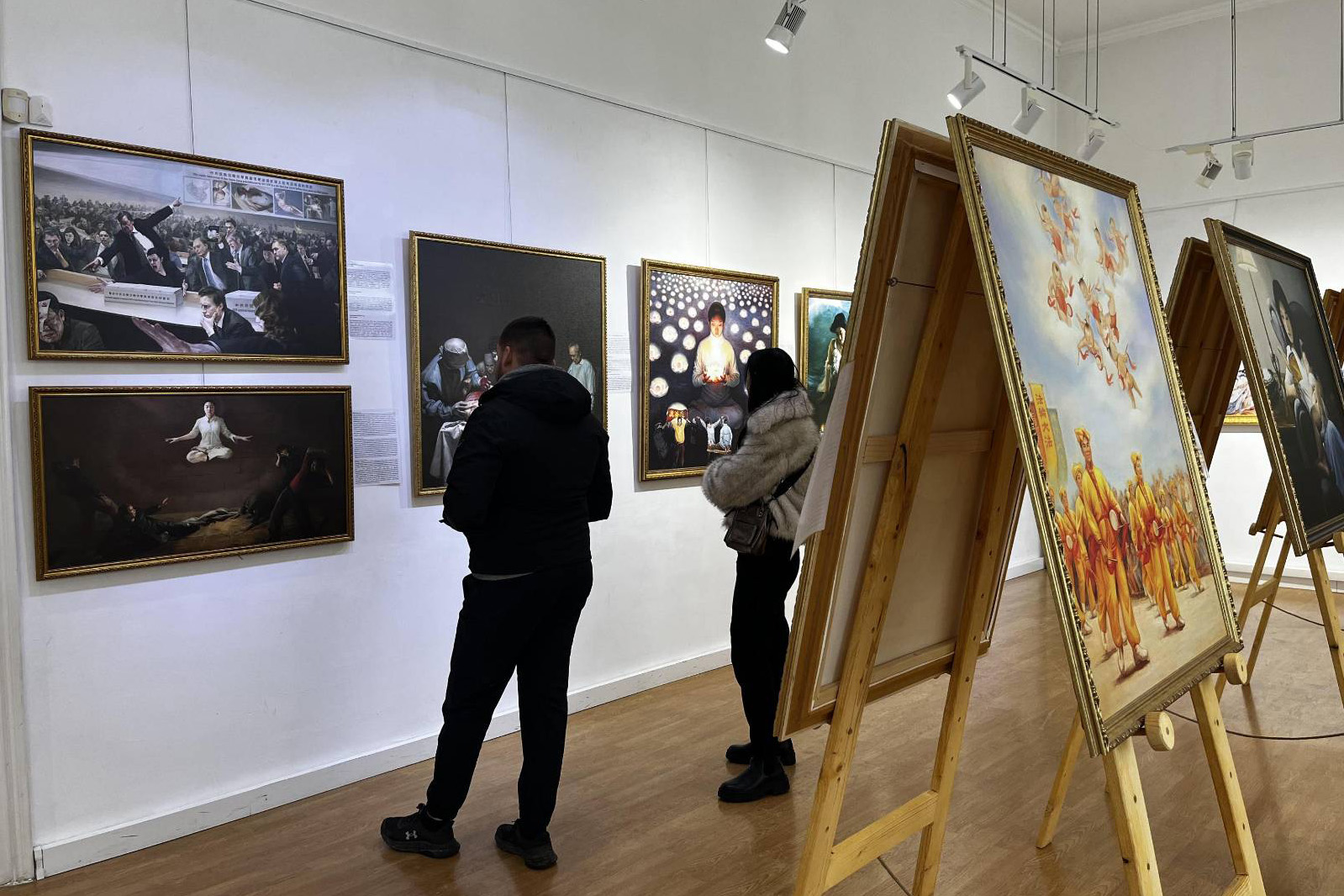 Young people from France view the paintings.
Two young people from France were looking at the artworks in the city’s Historical Museum on a cold Sunday afternoon when they noticed The Art of Zhen-Shan-Zhen exhibition. They slowly viewed the paintings and read the descriptions. They told the volunteers they were from France and previously knew nothing about the events and themes depicted in the paintings. They thanked the practitioners for their efforts to raise awareness.
Widespread Coverage of the Exhibition on Bulgarian Media
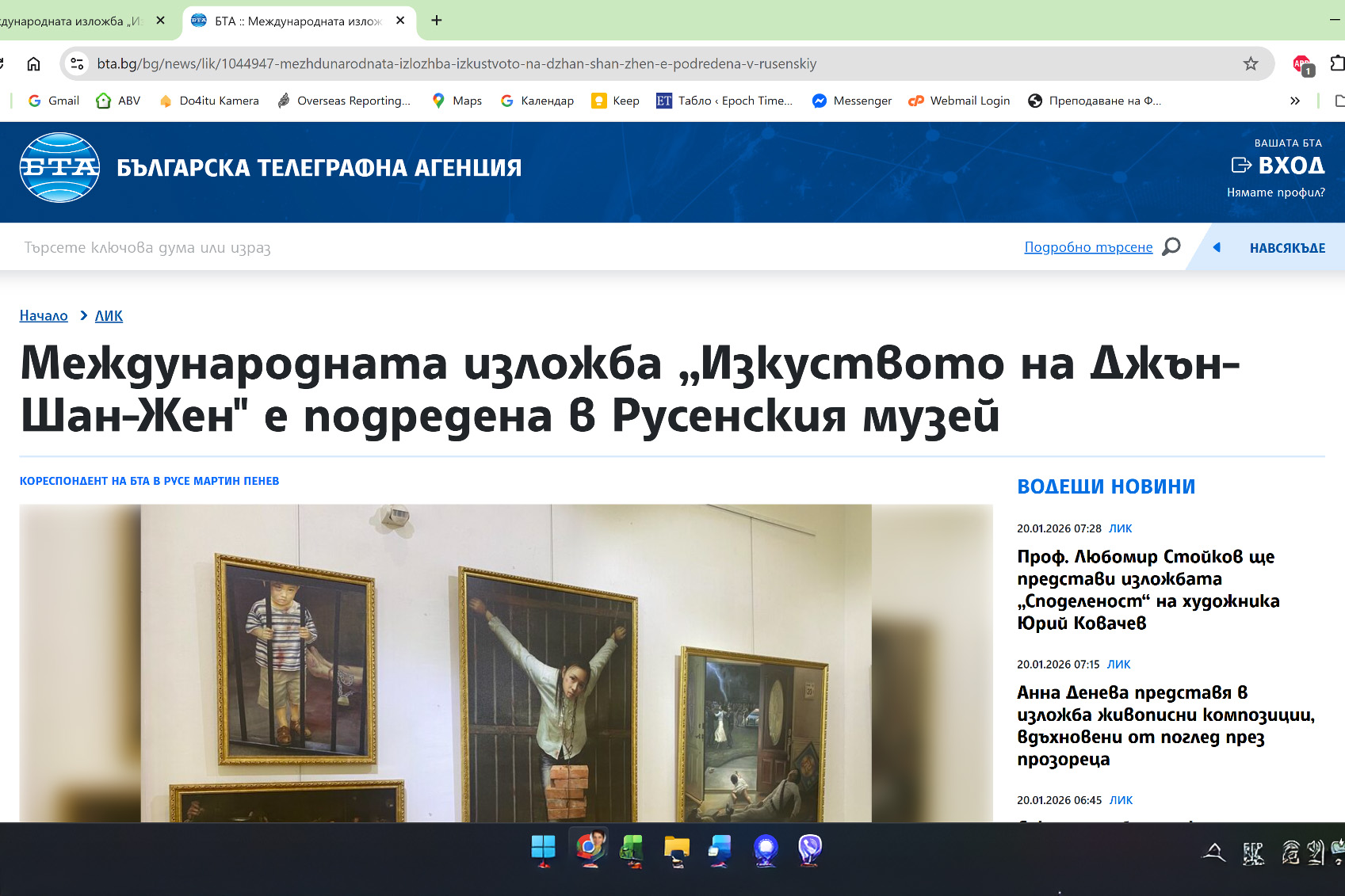
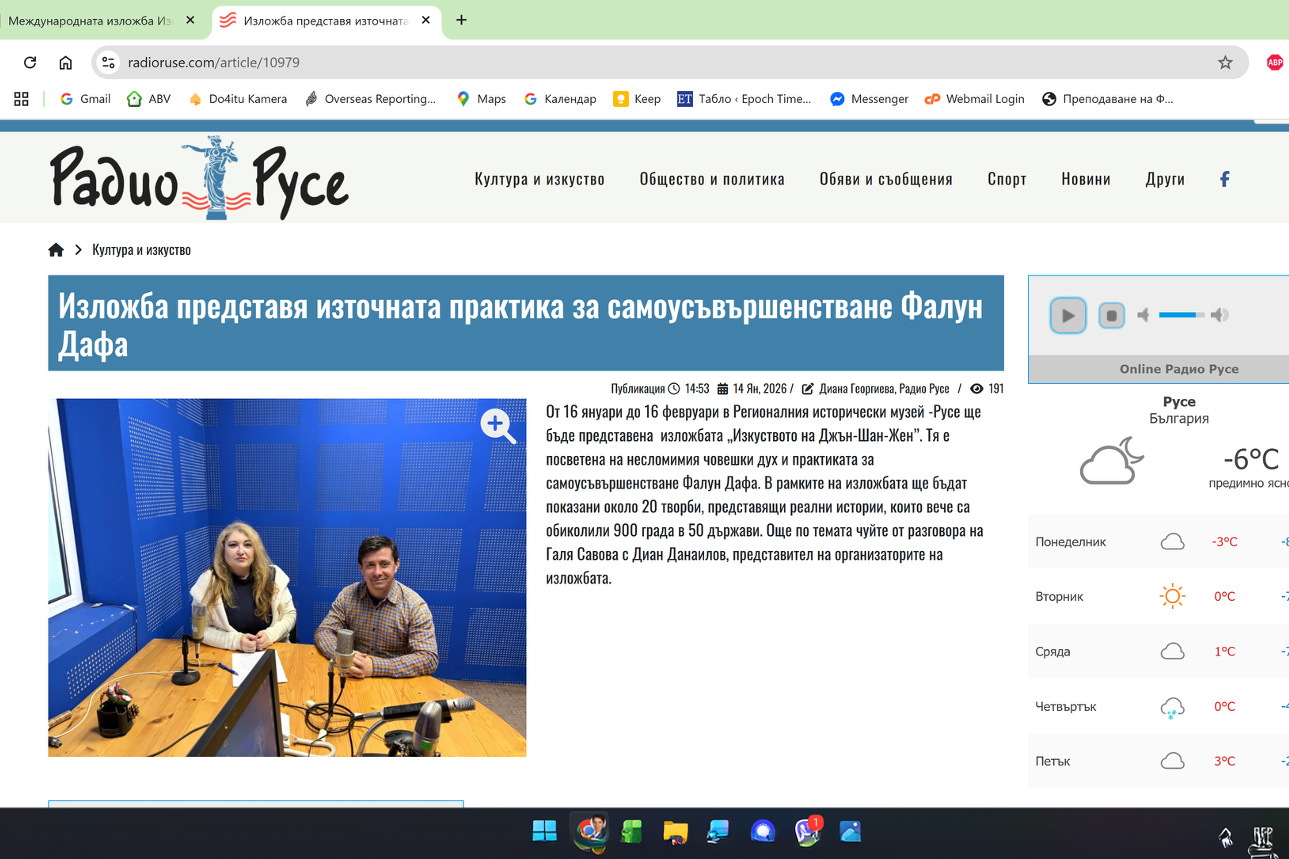 The event was covered by multiple Bulgarian national and regional media outlets.
More than 10 national and regional Bulgarian media outlets featured the event in their arts and culture columns.
Two days prior to the opening of the exhibition, Radio Ruse, a regional radio program, invited Dian Danilov, one of the exhibition’s organizers, as a special guest on its art and culture segment. Danilov explained the meaning of the exhibition’s artworks, as well as the history of Falun Dafa as a spiritual discipline.
On the exhibition’s opening day, January 16, the Bulgarian News Agency—the national news outlet for Bulgaria—ran an article on the exhibition which focused on how the artworks raised awareness of the persecution of Falun Dafa in China.
On Monday, January 19, 2026, Bulgarian National Television (BNT) broadcast live, from the Historical Museum in Ruse, a seven-minute conversation with practitioner Katya Kalfova who explained the purpose and content of the exhibition.
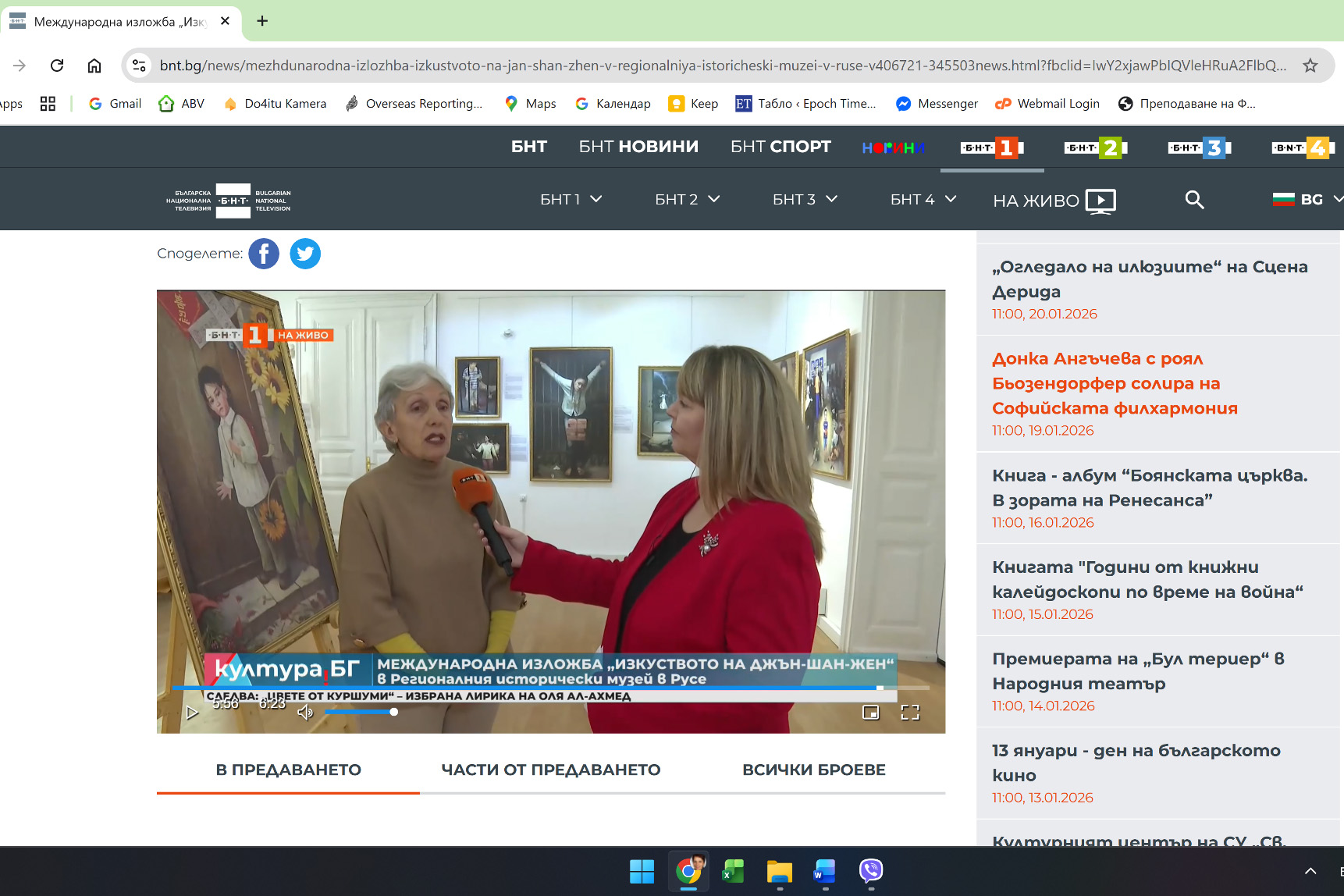 Katya Kalfova and reporter Ralitsa Marinova live during BNT’s culture program.
When asked by a reporter what the main message of the exhibition was, Katya said, “The main message is that every spiritual group and every person has the right to profess their belief in the divine ... Falun Dafa does not seek any political gain, they [practitioners] only want to improve themselves, for personal improvement, and to tell the world that this is something very good, that the healing power of morality and virtue is very strong and very real, and it happens.”
She added, “Through spiritual principles, through faith in the divine and supreme justice, a person can lead a much better, more fulfilling life.”