Rally in Toronto Marks the April 25 Appeal and Calls for an End to the Persecution
(Minghui.org) To commemorate the 27th anniversary of the April 25 appeal in Beijing, Falun Dafa practitioners held a rally in front of the Chinese Consulate in Toronto on April 25, 2026. Two practitioners who participated in the April 25 appeal and now live in Canada shared their stories.
Practitioners walked to Bloor Street in the afternoon and displayed banners to tell people about the appeal. For 27 years, practitioners have never stopped striving for freedom of belief in China, and they continue to call for an end to the Chinese Communist Party’s (CCP) persecution.
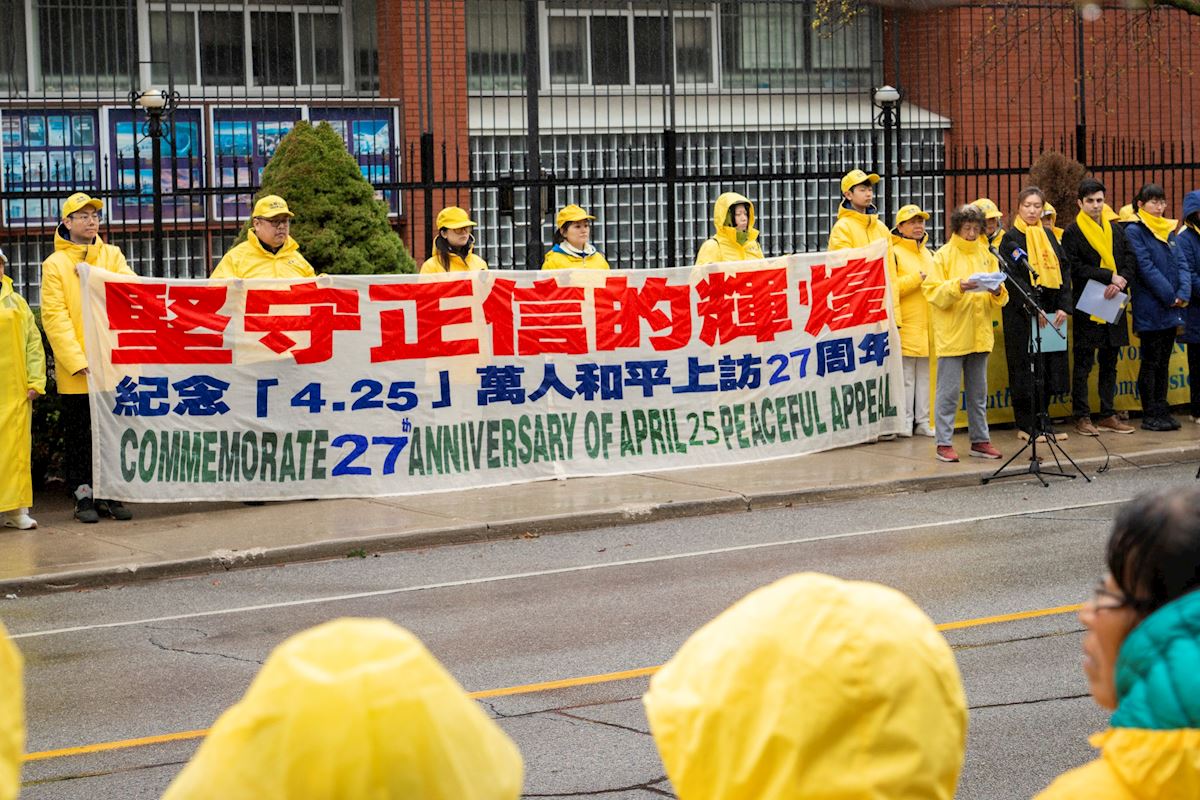
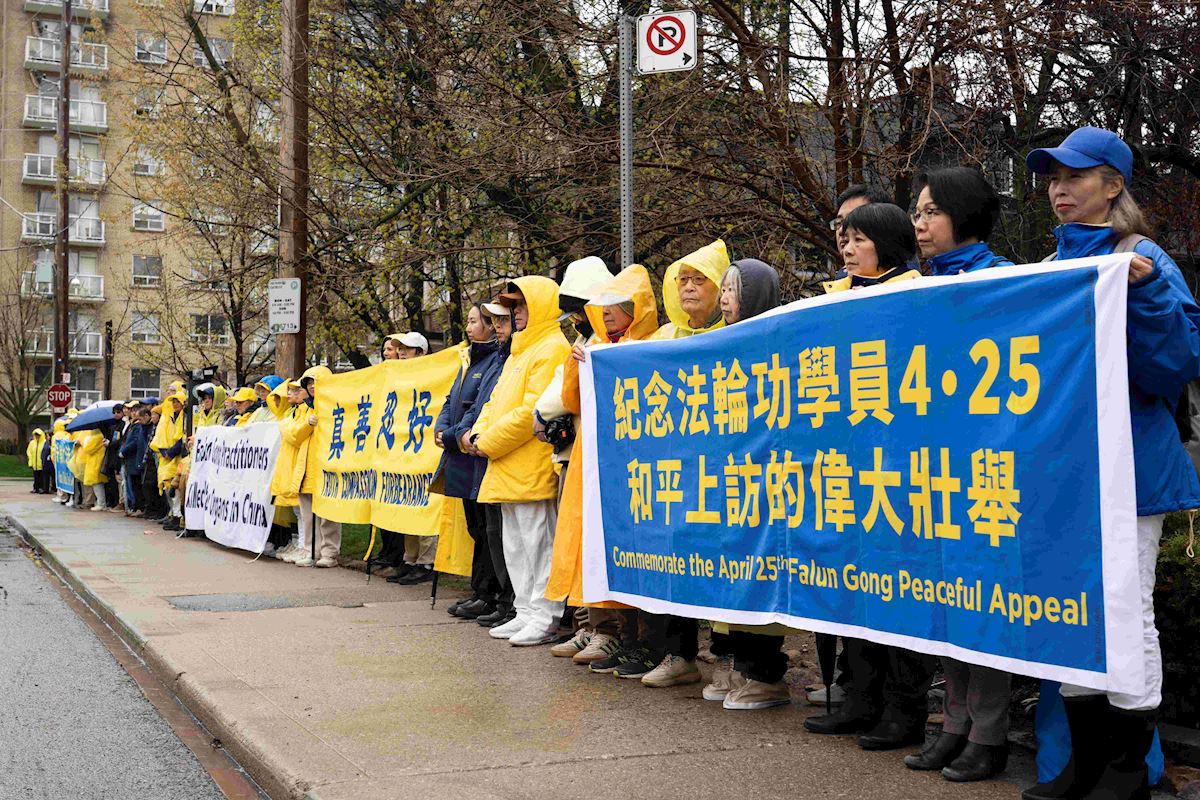
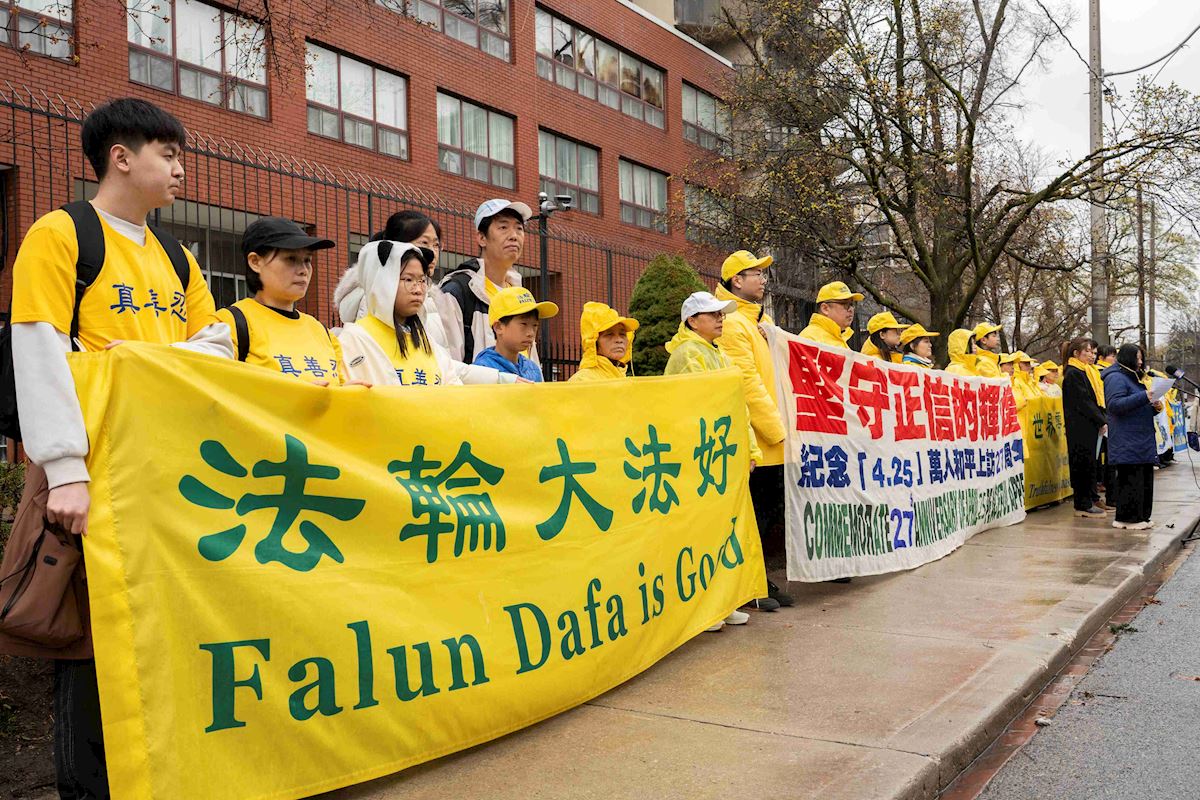
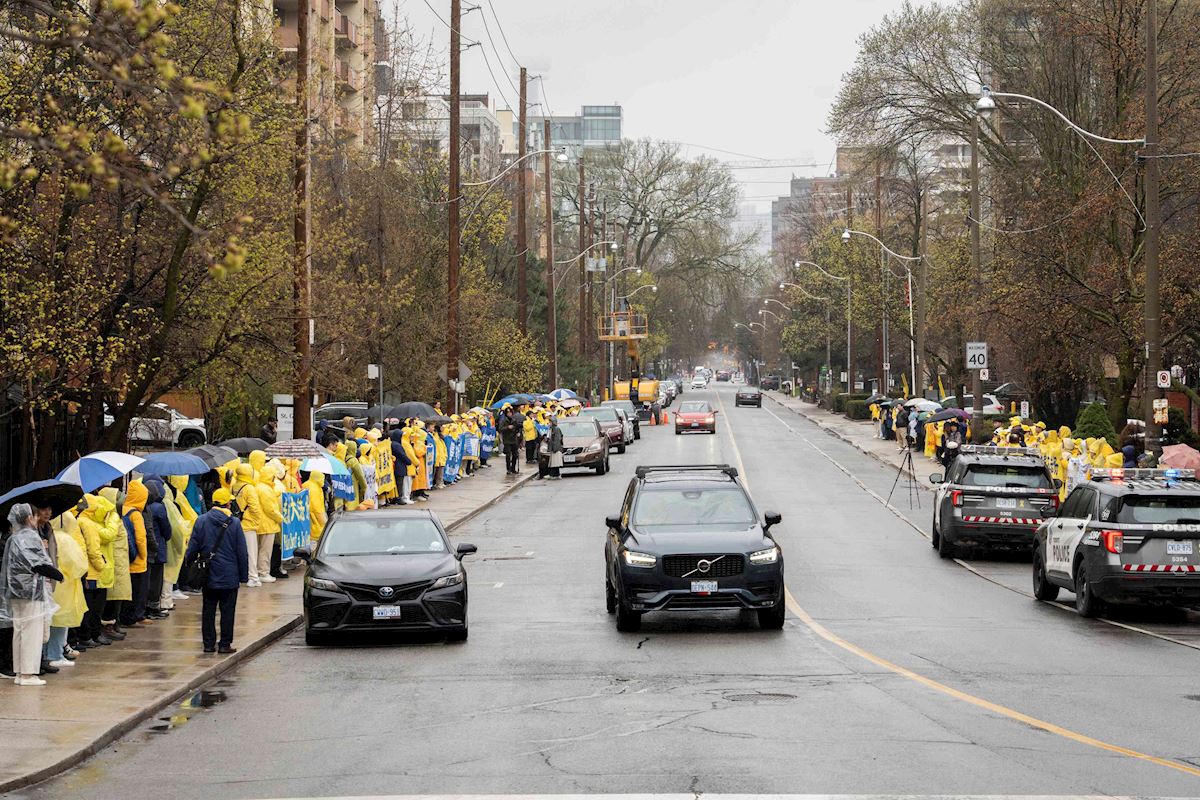 Rally in front of the Chinese Consulate in Toronto on April 25, 2026
Participants of the April 25 Appeal Share Their Stories
After a slanderous article was published in a Tianjin Education College magazine, Feng Xiumin and several other practitioners talked to the editor to clarify what Falun Dafa is. Ms. Feng now lives in Canada and shared her experience during the rally.
“Several military vehicles arrived, and many practitioners were arrested,” Ms. Feng said. “Armed police, wielding electric batons, beat people. Many practitioners suffered head injuries and had profuse bleeding, while others sustained dislocated arms. We went to the municipal government to report the situation, but an official told us, ‘We cannot resolve this matter; you should go to Beijing tomorrow to file your petition.’”
Thus, she and several other practitioners went to Beijing on April 25, 1999. They asked a police officer for directions and were directed to the National Appeals Office. When they arrived, more than 10,000 practitioners lined the sidewalks near the appeal office.
“When we were told we could freely practice Falun Dafa, everyone left quietly,” Ms. Feng said. “But three months later, the CCP started persecuting Falun Gong. I was arrested multiple times, incarcerated in forced labor camps twice, and was dismissed from my work unit.”
Another practitioner, Ms. Feng, who also participated in the April 25 appeal, said three members of her family went to Beijing after they learned that more than 40 practitioners were arrested in Tianjin.
“When we arrived in Beijing, practitioners were lined up along the western wall of Zhongnanhai, leaving the sidewalk clear,” Ms. Feng recalled. “Some read quietly, others conversed in hushed tones, and some meditated; the atmosphere was remarkably peaceful and serene. The people gathered there included students, government officials, parents with their children, and elderly individuals in their 80s. I walked the full length of the line, which wound from one alley to the next. When I looked in the distance, I could not see the end of the line.”
She added, “With so many people present, not a single person was boisterous, nor did anyone throw litter on the ground; all doorways—and every area where pedestrians passed—were kept clear. Later that evening, we were told that the issue had been resolved. People gradually dispersed without chaos.”
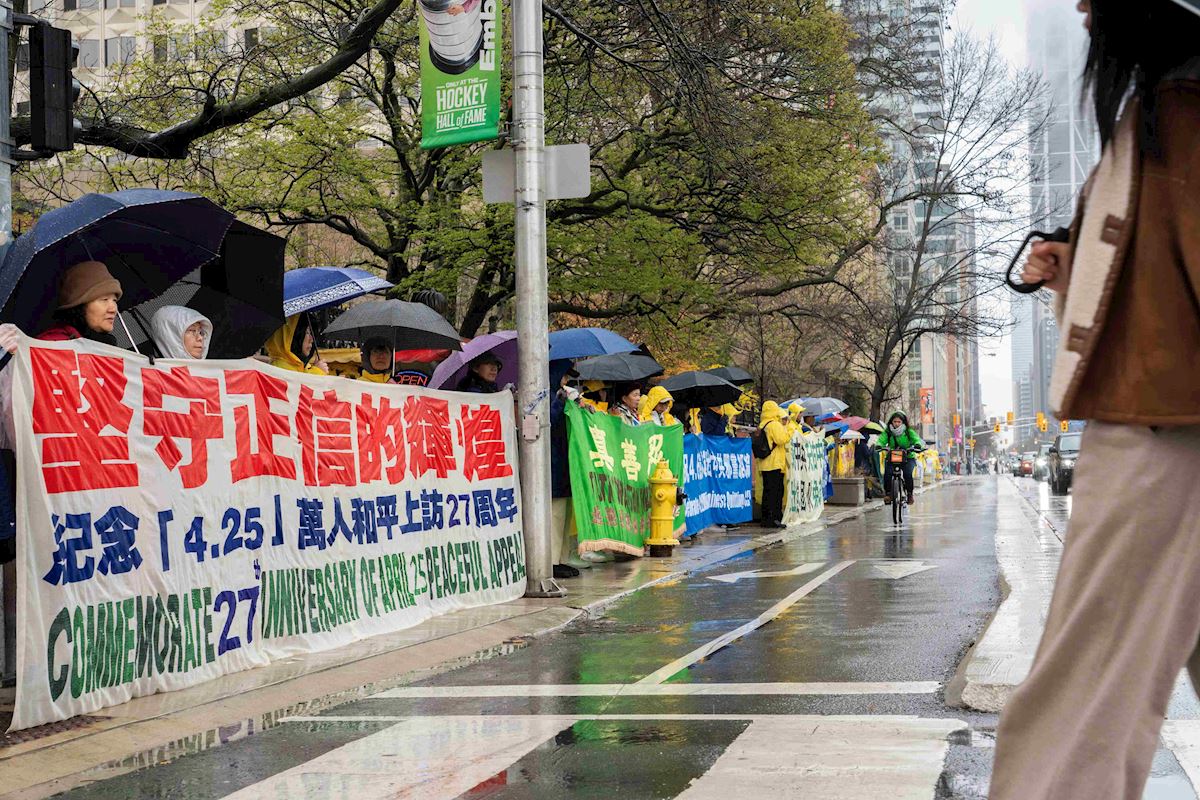
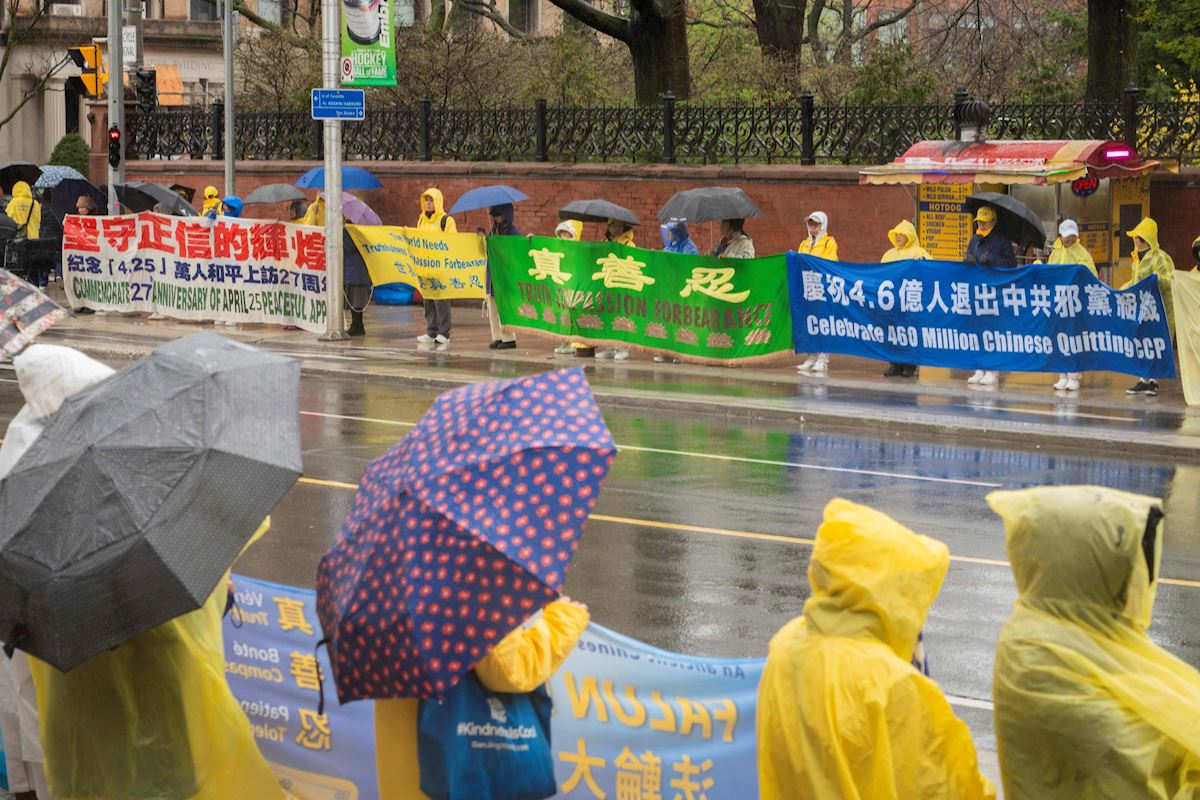
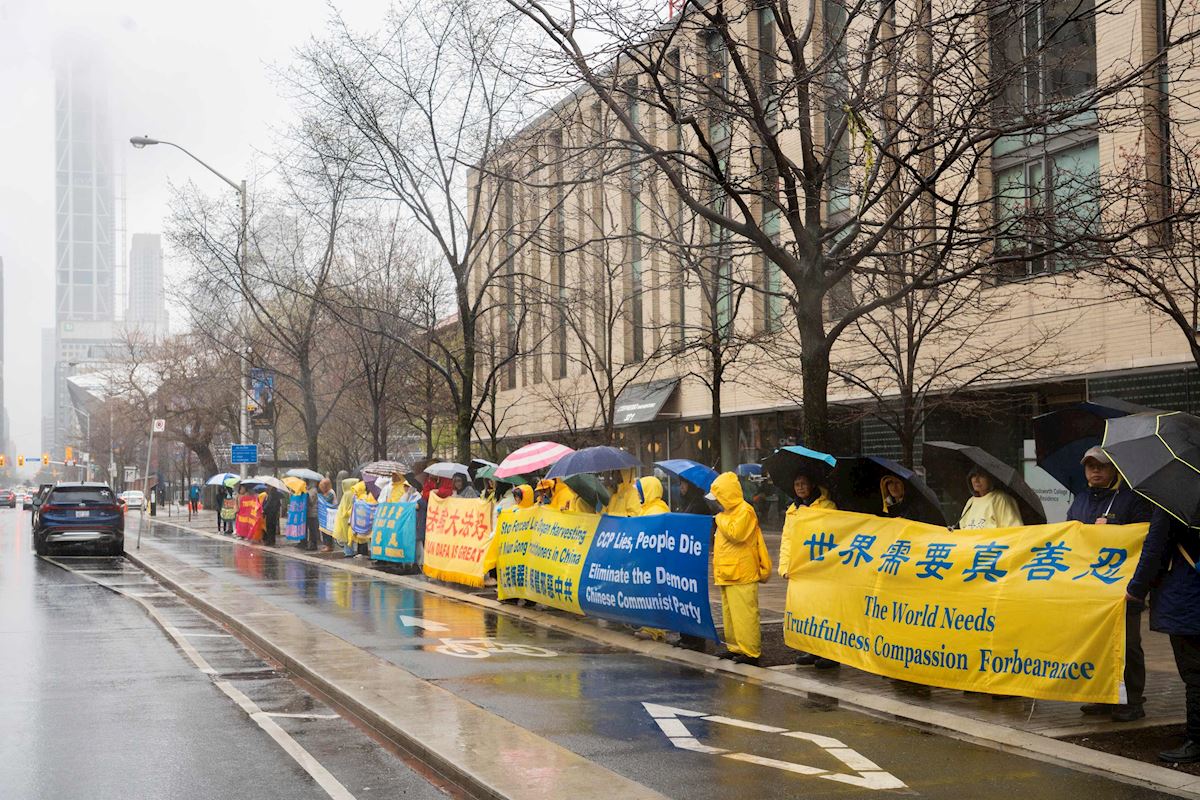
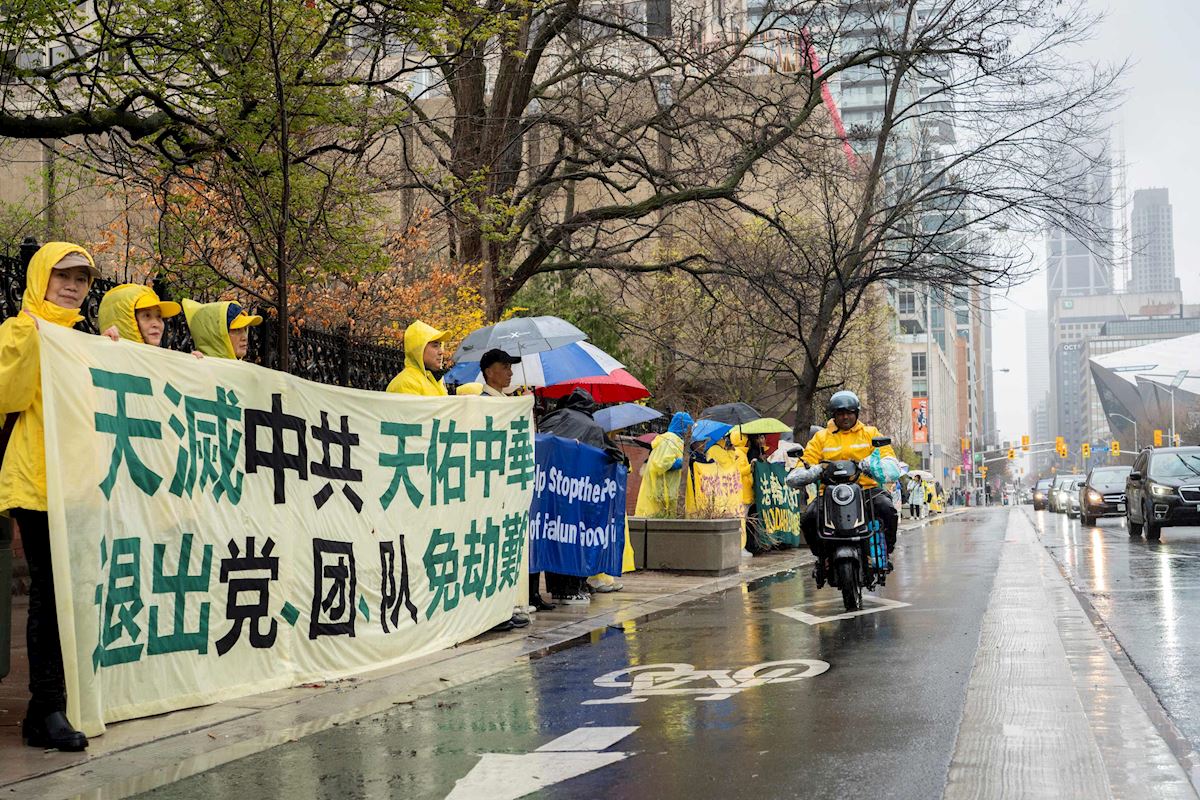 Practitioners held banners on Bloor Street on the afternoon of April 25.
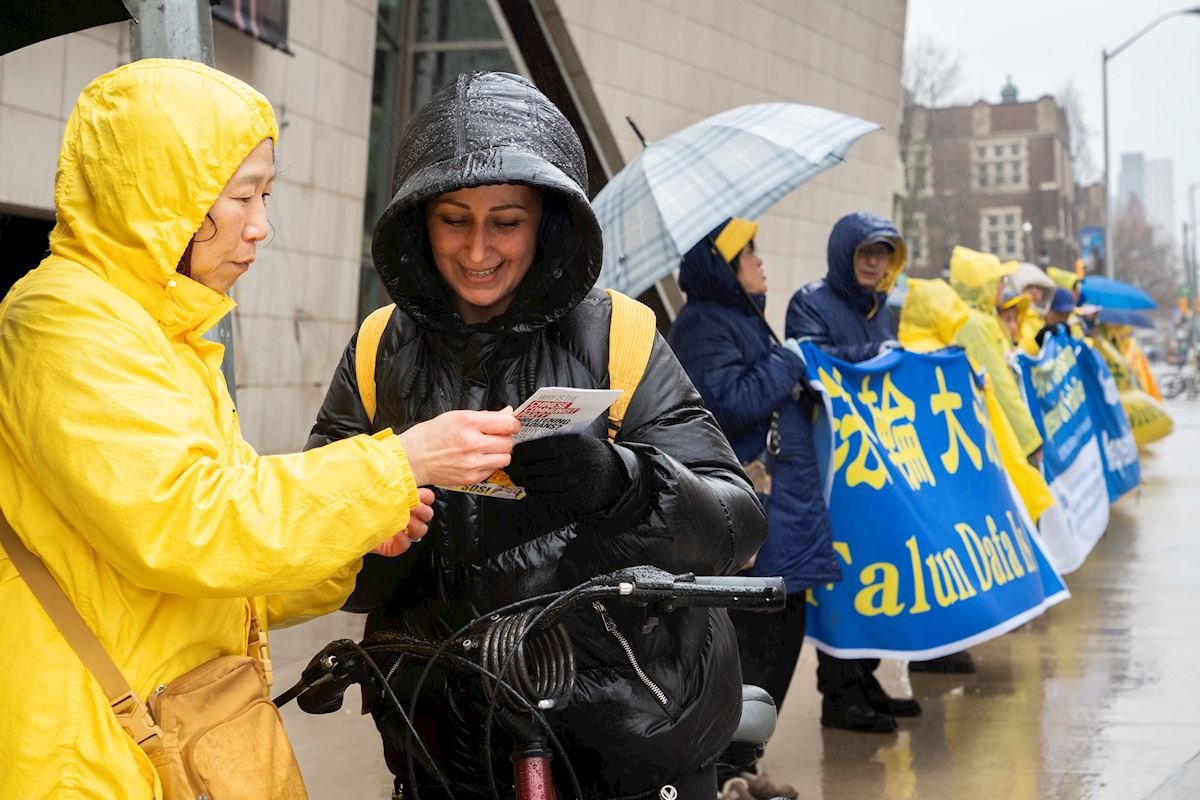
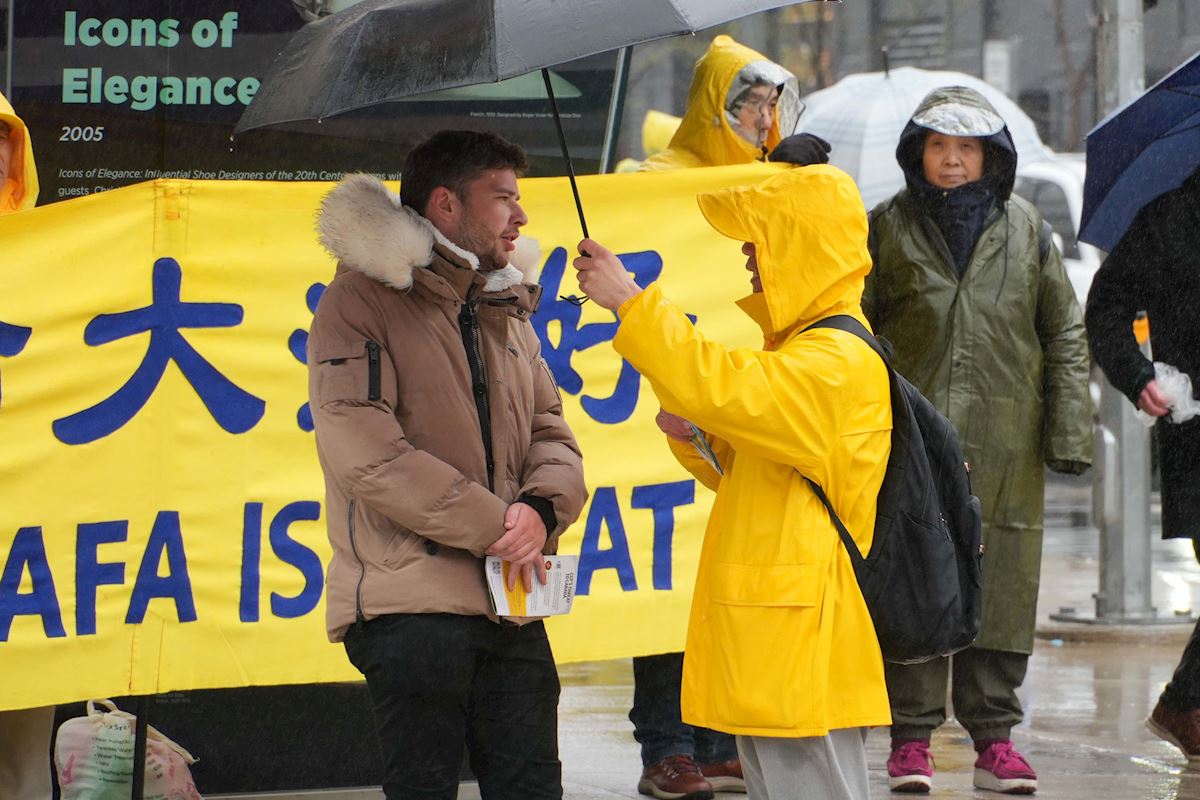
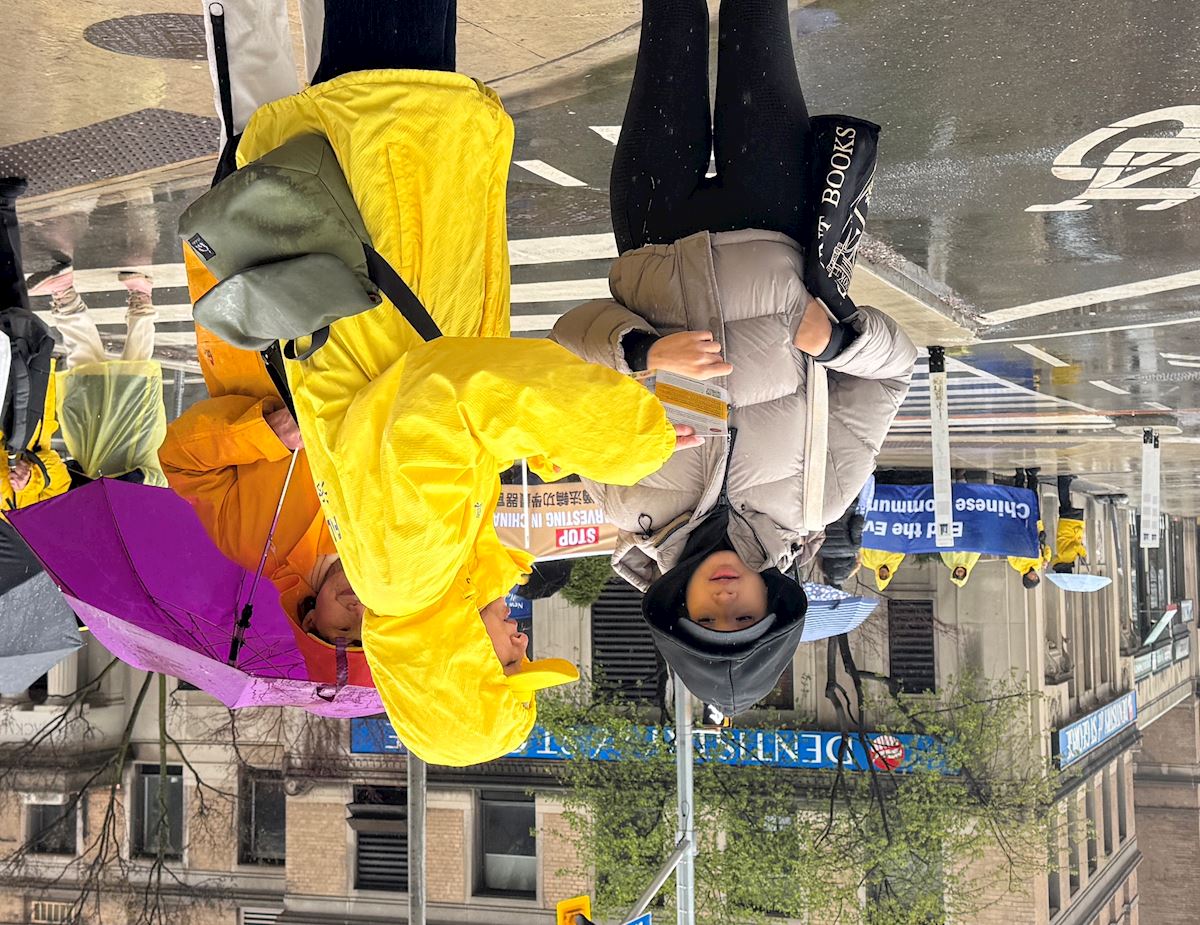 Practitioners talk with passersby about the event and the CCP’s transnational repression.
People Hope the Persecution Ends Soon
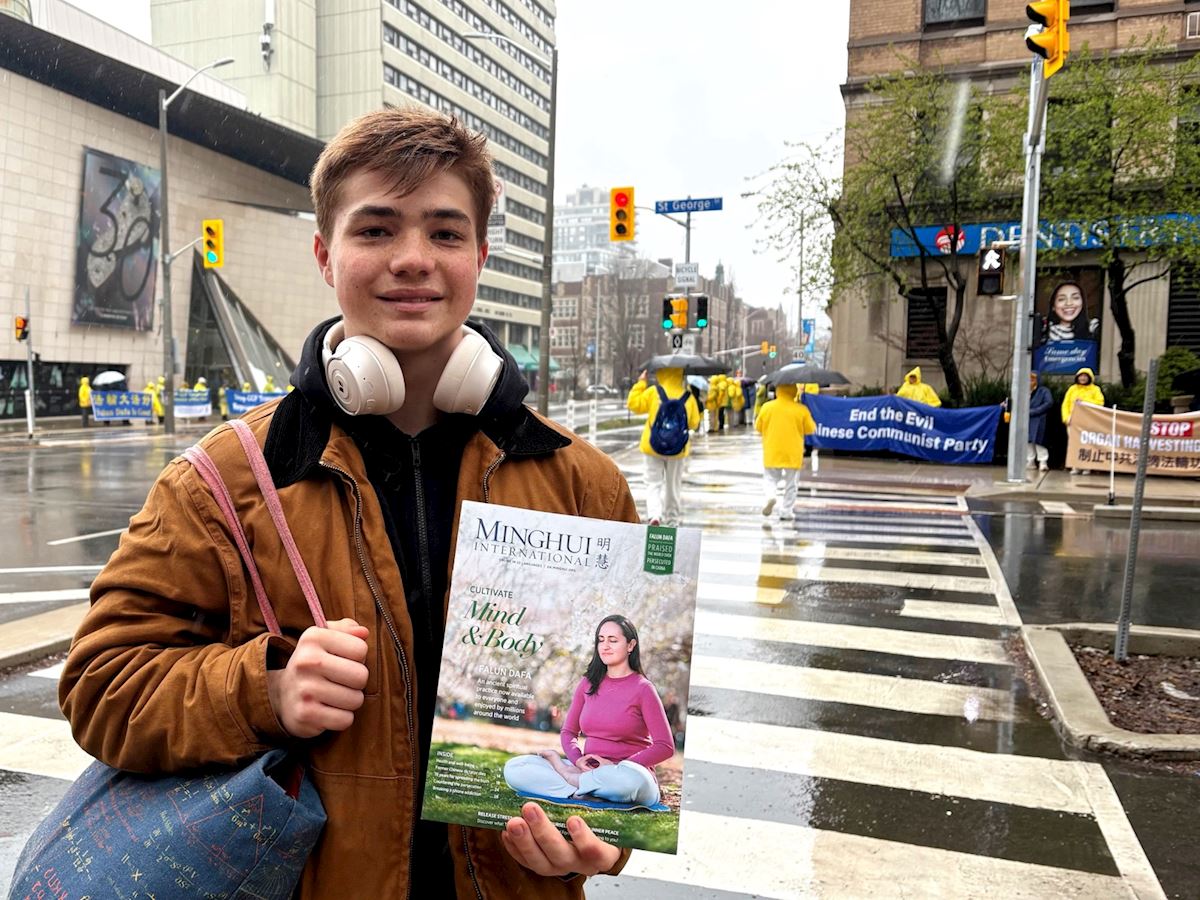 Tobias, a high school student, calls for an immediate end to the persecution.
After Tobias saw the banners and read a flyer, he said, “Falun Dafa sounds like a very peaceful practice. One should treat others with sincerity and love.” When he heard about the CCP’s ongoing persecution in China, he said, “Falun Dafa should be allowed in China. This persecution is wrong and should stop immediately.”
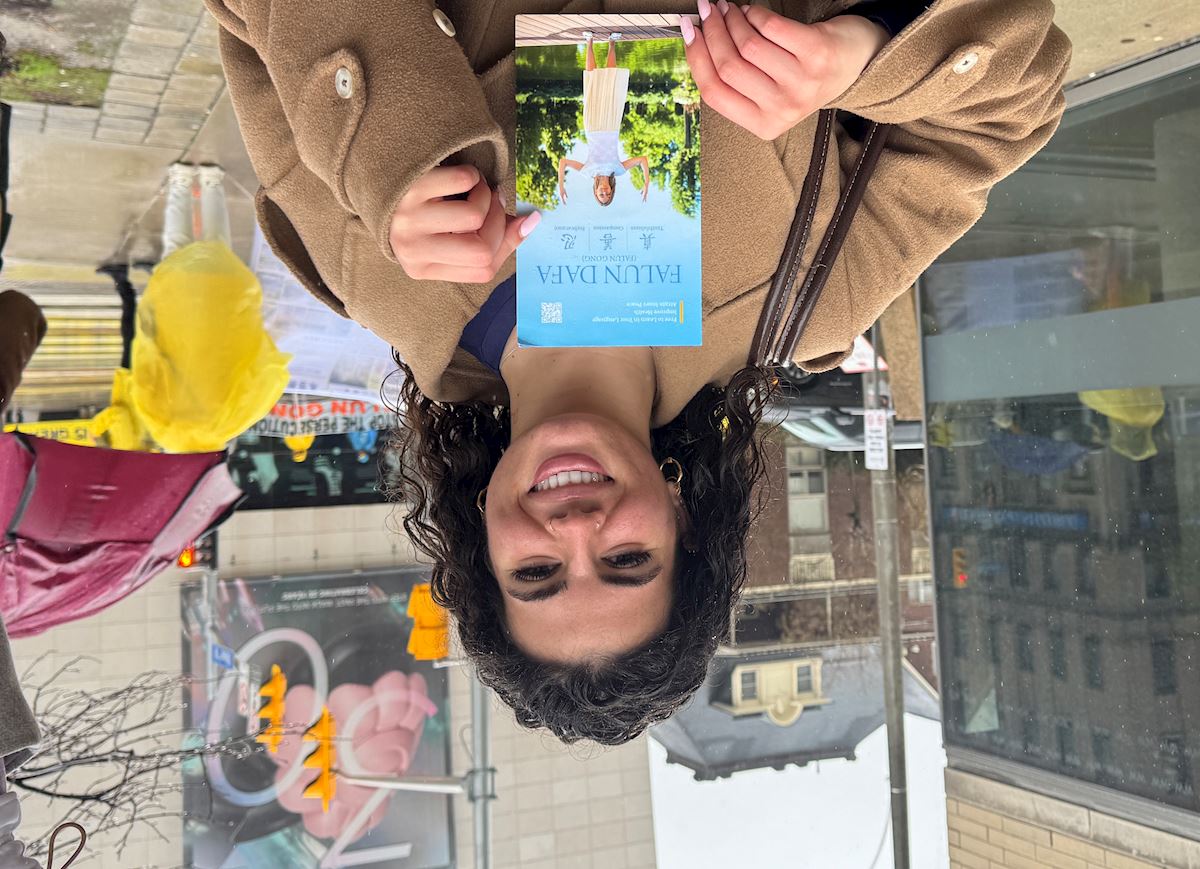
Alexandra commends practitioners’ resilience.
Alexandra talked with practitioners and said she saw their event last year, “I think you are incredibly resilient. It is a beautiful thing to see you standing together, even in the rain, fighting for your belief.”
She said she lived in Hong Kong for 12 years with her parents. She heard of Falun Dafa when she attended school there. She said, “I did some research and learned about the persecution. I felt sad.” She added, “I hope things will take a turn for the better; I hope the Chinese people can live freely and practice their beliefs. I believe the government should not criminalize any virtuous faith.”
Background: What Is the April 25 Appeal?
Falun Dafa (also known as Falun Gong) was first introduced to the public by Mr. Li Hongzhi in Changchun, China, in 1992. The spiritual discipline is now practiced in over 100 countries worldwide. Millions of people have embraced the teachings—which are based on the principles of Truthfulness, Compassion, and Forbearance as well as five gentle exercises—and experienced improved health and well-being.
On April 23 and 24, 1999, police officials in Tianjin, a city near Beijing, assaulted and arrested dozens of practitioners who gathered outside a magazine office to discuss errors in a recently published article attacking Falun Dafa. As word spread of the arrests and more practitioners inquired with officials, they were told they had to take their appeals to Beijing.
The following day, April 25, some 10,000 Falun Dafa practitioners spontaneously gathered at the National Appeals office in Beijing, as they had been instructed by Tianjin officials. The gathering was peaceful and orderly. Several Falun Dafa representatives were called in to meet with Chinese Premier Zhu Rongji and members of his staff. That evening, practitioners’ concerns were answered. The arrested practitioners in Tianjin were released, and everyone went home.
Jiang Zemin, former head of the CCP, perceived the spiritual discipline’s growing popularity as a threat to the CCP’s atheistic ideology and issued an order to ban Falun Dafa on July 20, 1999.
Minghui.org has confirmed the deaths of thousands of practitioners due to the persecution over the years; the actual number is suspected to be much higher. More have been imprisoned and tortured for their faith.
There is concrete evidence that the CCP sanctions the harvesting of organs from detained practitioners, who are murdered to supply the organ transplant industry.