Unheard Voices: From the Holocaust to the Persecution of Falun Gong
(Minghui.org) Primo Levi, a Jewish-Italian Holocaust survivor, authored several books about his experience in the Auschwitz concentration camp. In one of them, The Drowned and the Saved, he recounts chilling remarks from a Nazi SS officer about the cruelty of the gas chambers.
“However this war may end, we have won the war against you; none of you will be left to bear witness, but even if some of you survive, the world would not believe him,” said the officer. “There will perhaps be suspicions, discussions, research by historians, but there will be no certainties, because we will destroy the evidence together with you.
“And even if some proof should remain and some of you survive, people will say that the events you describe are too monstrous to be believed: they will say they are the exaggerations of Allied propaganda and will believe us, who will deny everything, and not you. We will be the ones to dictate the history of the Lagers,” he continued.
These chilling words depicted a dire scene. Based on his own experience, Levi believed the pressure that a totalitarian state can exert on the individual is frightful. Its weapons are substantially three: direct propaganda, the barrier erected against pluralism of information, and terror.
Unfortunately, after the Chinese Communist Party (CCP) began to suppress Falun Gong in 1999, all these have been repeated. With decades of exercises from previous political campaigns and the state-of-the-art propaganda machinery, the CCP had actually pushed this persecution of faith to a new, unprecedented level.
Facts Neglected
Why was the Holocaust not revealed to the public in time? Historians found several reasons.
The first factor was deliberate secrecy and deception. The Nazi regime actively masked its extermination efforts using euphemisms like “resettlement to the east,” and deployed slave labor units (such as Operation 1005) to dig up and incinerate mass graves to hide the evidence.
The second factor was the extreme scale of the atrocities and the resulting incredulity. When early reports emerged—such as those from Jan Karski and Witold Pilecki—Allied leaders met them with skepticism. The scale of industrialized murder was so unprecedented that it seemed unbelievable to many observers at the time.
In Beyond Belief: The American Press and the Coming of the Holocaust, historian Deborah Lipstadt documented how the American press failed to treat the destruction of European Jews as urgent news. The New York Times, for example, published a report on the massacre of 700,000 Polish Jews on June 27, 1942. This shocking news, concerning the lives of hundreds of thousands of people, was ultimately relegated to an inconspicuous corner of page 6.
On November 25, 1942, Rabbi Stephen Wise held a press conference to announce that the U.S. State Department had confirmed that the Nazis were executing a plan to annihilate European jews. On the following day, The New York Times published a short article on page 10 alongside the official Nazi denial.
“Why, then, were the terrifying tales almost hidden in the back pages? Its neglect was far from unique and its reach was not then fully national, but as the premier American source of wartime news, it surely influenced the judgment of other news purveyors,” reflected former executive editor Max Frankel in 2001 in an article titled “150th Anniversary: 1851-2001; Turning Away From the Holocaust.”
“There is no surviving record of how the paper's coverage of the subject was discussed by Times editors during the war years of 1939-45. But within that coverage is recurring evidence of a guiding principle: do not feature the plight of Jews, and take care when reporting it, to link their suffering to that of many other Europeans,” Frankel continued.
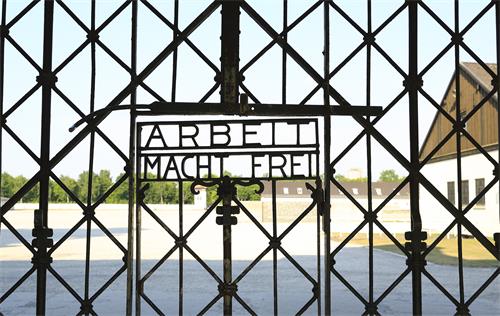 Dachau, the first Nazi concentration camp used to hold approximately 190,000 individuals over the course of its operation. (iStock)
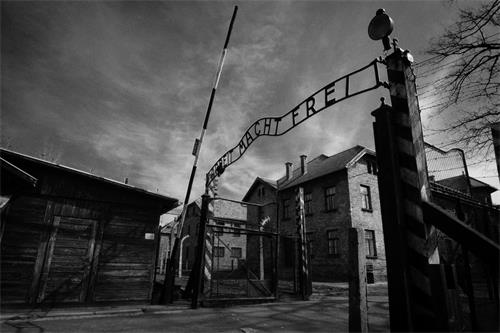
Auschwitz concentration camp, where an estimated 1.1 million people lost their lives. (iStock)
27-Year Persecution Ignored
Unfortunately, history has repeated itself after the Chinese Communist Party (CCP) began suppressing Falun Gong in July 1999. Over the past 27 years, the ongoing severe persecution—arguably the largest ongoing human rights abuse in history—has been largely ignored.
The persecution of Falun Gong is serious in several respects. Most notably, the scale is staggering; when the crackdown began, there were about 100 million practitioners in China. Nearly all have been subjected to discrimination fueled by state-sponsored hate propaganda. Under the direction of former CCP leader Jiang Zemin, the 610 Office was established in June 1999 to oversee the systematic persecution at all levels, from the Politburo to the township and street level. All government agencies, education institutions, news media, and other professions were mobilized to participate. In many cases employees’ wages became linked to their level of participation in the persecution.
The second aspect is the severity. In Jiang’s own words, the persecution against Falun Gong practitioners was intended to “ruin their reputation, bankrupt them financially, and destroy them physically.” In addition to arrest, home ransacking, detention, and imprisonment, practitioners also were subjected to torture, forced labor, and psychiatric abuse, and even became the victims of forced organ harvesting.
A third critical aspect is the underreporting and neglect by the news media. Before the suppression started, Chinese media sometimes reported the benefits of Falun Gong—a meditation system based on the principles of Truthfulness-Compassion-Forbearance—from physical health to the improvement of mind nature. Since 1999, the CCP-controlled media have become propaganda machines, relentlessly disseminating the CCP’s slander against Falun Gong. Together with tight censorship and a sophisticated surveillance system, it is hard for ordinary citizens—and sometimes even government officials—to access factual information about Falun Gong.
Despite limited coverage on Falun Gong in the early days of the suppression, news media outside China have largely remained silent to the massive human rights abuse, which is similar—or even worse—than the period of the Holocaust. In fact, the CCP also exerted financial pressure to influence Western media. Unfortunately, some media outlets have joined the CCP to defame Falun Gong.
That is why Falun Gong practitioners inside and outside China have worked tirelessly to raise awareness of this human rights nightmare. That is also why, in the past 27 years, Minghui.org has dedicated its efforts to collecting first-hand information on the brutality inside China and global efforts calling for the end to the atrocity. We may not know the names of these volunteers, but their efforts will become an important chapter of history.
After the Holocaust, the phrase of “never again” was inscribed at many concentration camp memorial sites, serving as a reminder to prevent future atrocities. Yet, as the genocide against Falun Gong practitioners unfolds—including the unprecedented forced organ harvesting—many remain silent. We hope readers will recognize the lessons of history, and take action to help the innocent.
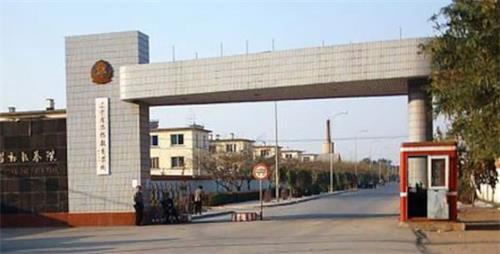 Masanjia Labor Camp is notoriously known for detaining and torturing Falun Gong practitioners. Minghui has published over 8,600 articles exposing brutalities that have occurred at this facility.