Taiwan: Coordinators Reflect on Their Cultivation Journeys
(Minghui.org) Volunteer Falun Dafa coordinators from across Taiwan met on July 4 and 5 at the Chien Tan Youth Activity Center in Taipei, to read the Fa and discuss their cultivation experiences. Throughout the two-day event, they shared insights from their cultivation practice and discussed how to improve together in various environments, focusing on themes such as studying the Fa, clarifying the truth about the persecution, improving their xinxing (moral character), and coordinating well.
Fourteen coordinators discussed their cultivation experiences, which included taking responsibility, improving the group cultivation environment, overcoming complacency, letting go of various attachments, and improving their character through introspection and selfless cooperation.
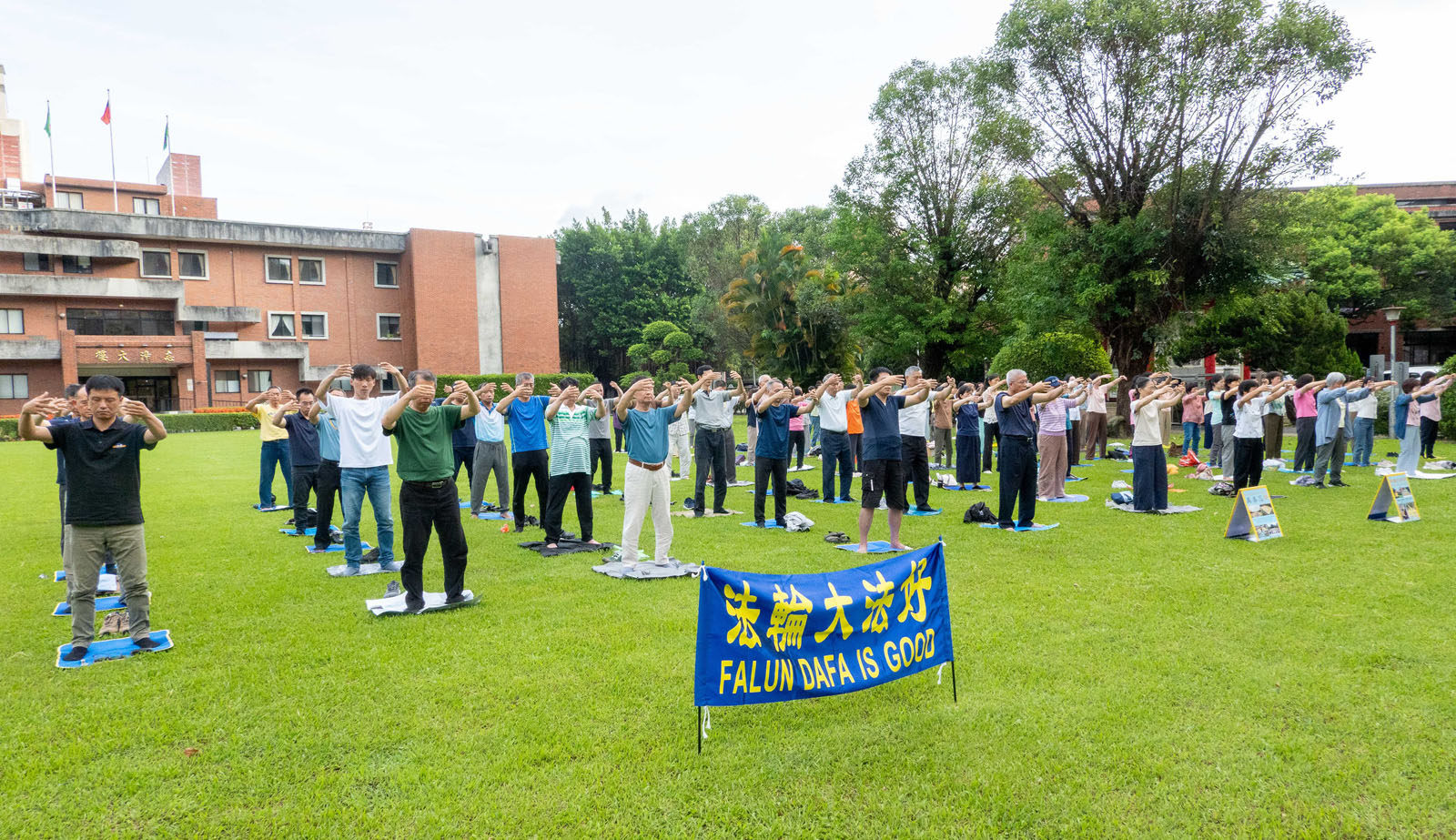
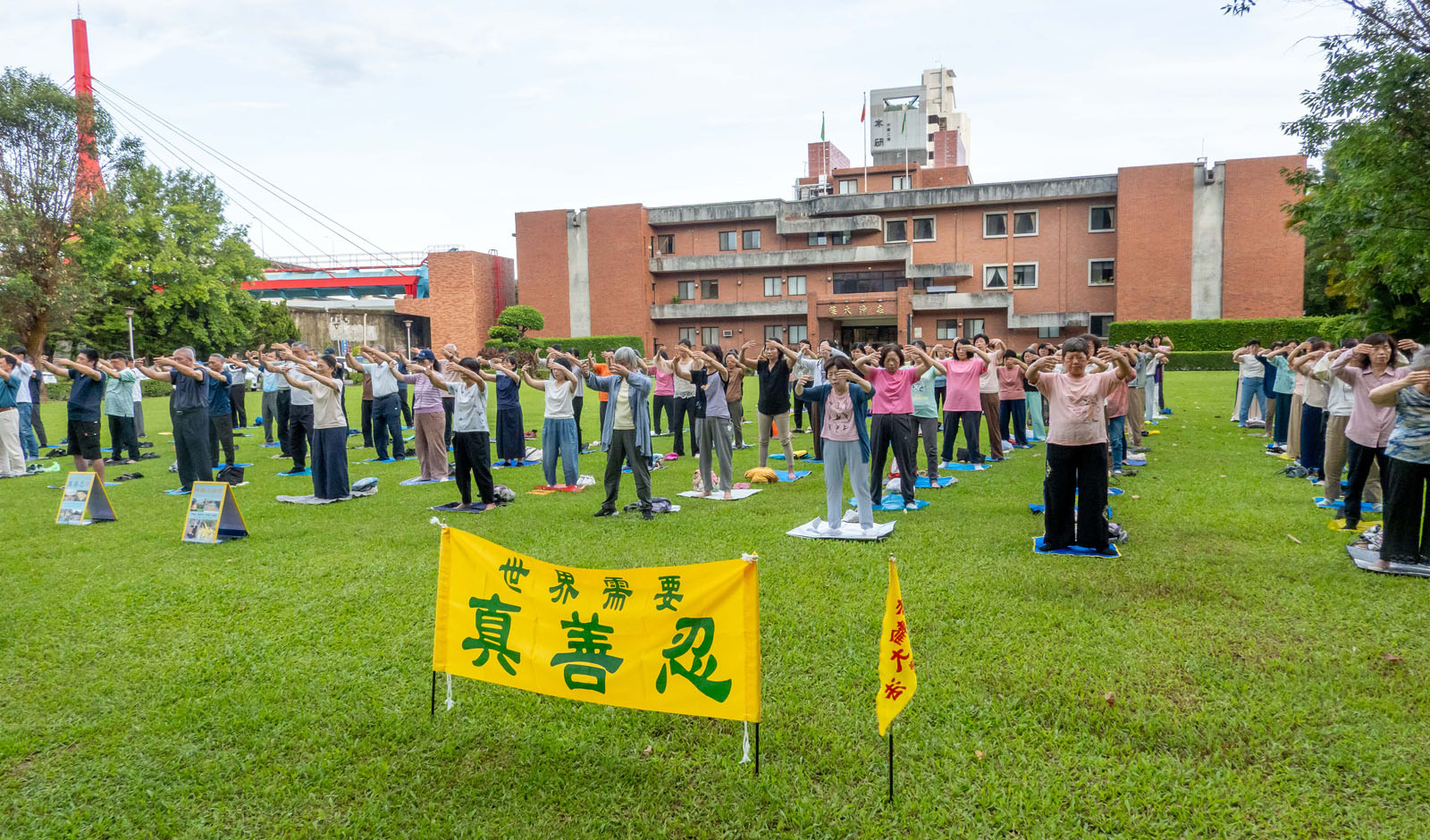 Coordinators did the exercises at the Chien Tan Youth Activity Center in Taipei on the morning of July 5, 2026. (Minghui.org)
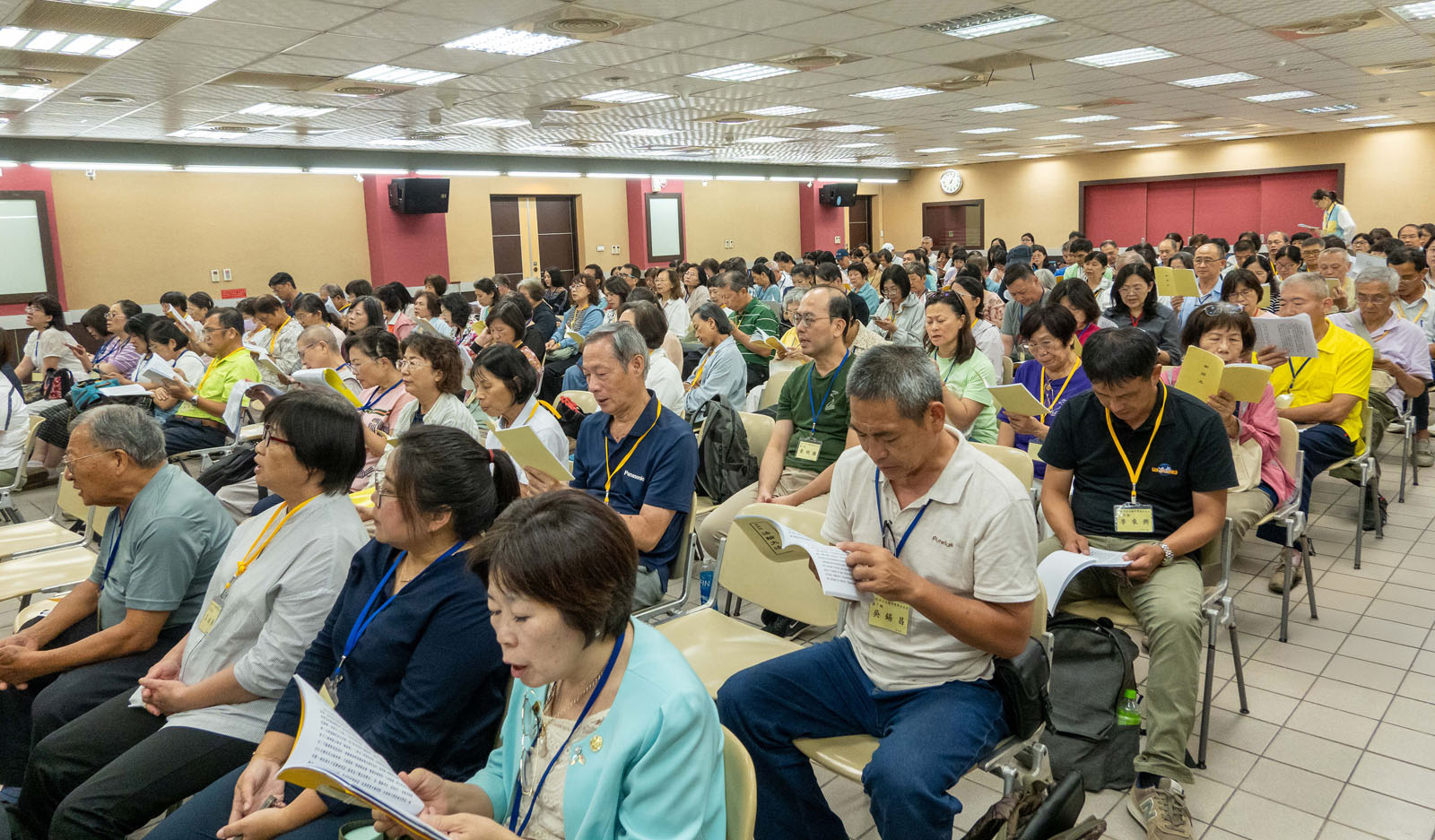
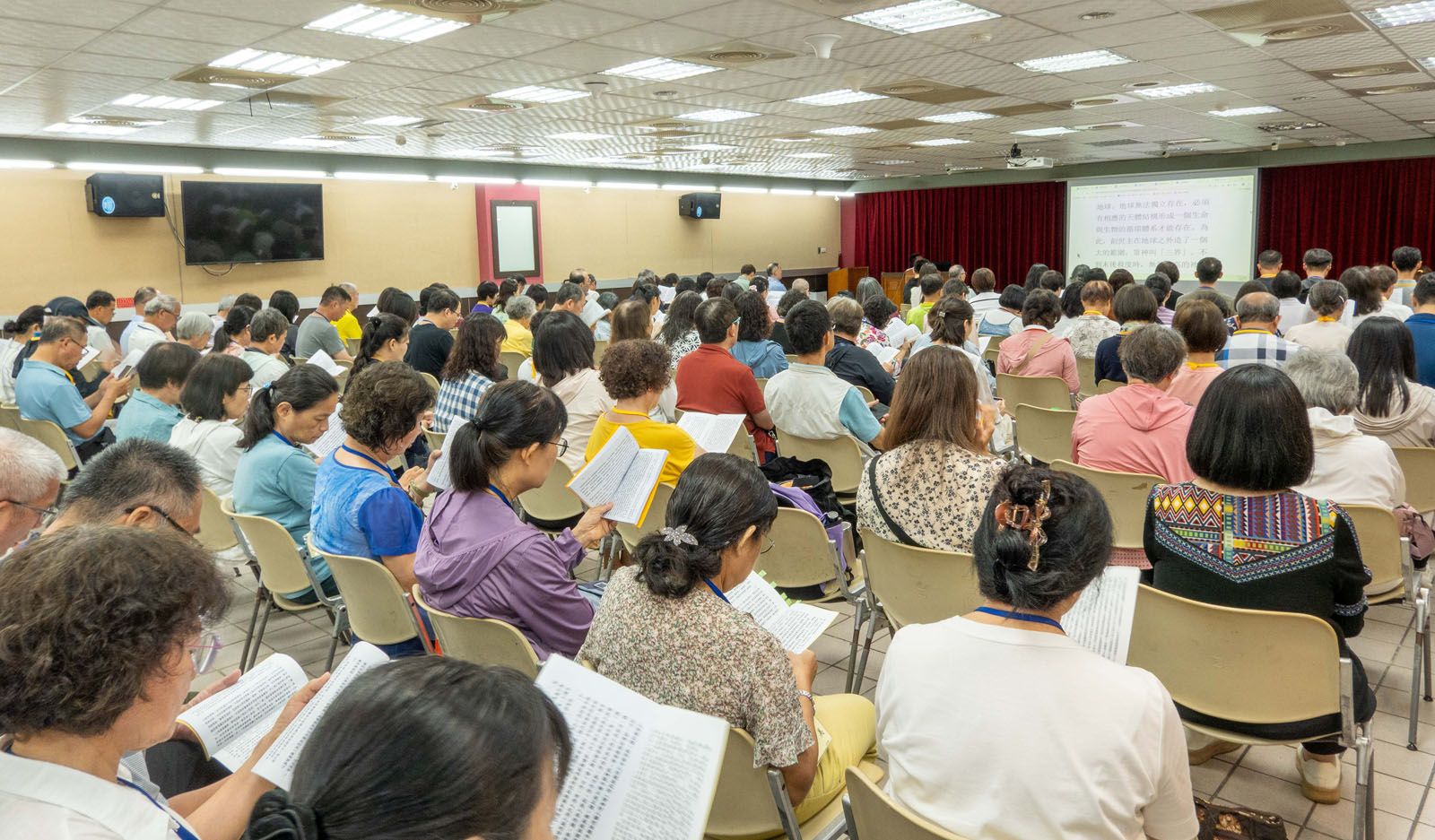 Coordinators from across Taiwan held a sharing session on the afternoon of July 5. (Minghui.org)
Breaking Free From Smart Phone Addiction
Cheng-hong talked about how he overcame the problem of falling asleep while doing the exercises. Fellow practitioners had noticed that he dozed off. He reminded himself to stay alert, even practicing with his eyes open, but after a while his eyes slowly closed, and he would fall asleep again.
He realized that he needed to examine himself for fundamental attachments, because the drowsiness was a superficial manifestation. He discovered that he frequently scrolled through his phone and watched videos, and this was undermining his determination to be diligent. He resolved to cut back on his phone use. As a result, he had more free time in the evenings. He was able to wake up around 4:00 a.m. to practice the exercises, and his mind became much clearer.
From his experience Cheng-hong realized how easily one can become addicted to mobile phones. He picked up his phone intending to handle work-related tasks, only to find himself watching a video. He was startled by the realization that this was not what he truly intended to do, yet his hand moved as if guided by some unseen force.
He realized that reducing his dependency on his mobile phone not only improved his cultivation but also prevented him from wasting time, thereby enabling him to better fulfill his responsibilities.
Pain Vanishes After Letting Go of the Obsession With Looking Beautiful
Hsin-mei said that half of her body began to hurt, from her legs, knees, and waist, to chest and back. Her health was good, so she wondered why this was happening.
After looking inward, she realized she was overly concerned about her figure. She felt that being heavy made her look unattractive, and she developed an attachment to her appearance. She began eating weight-loss soups.
As time passed she realized that a practitioner should maintain a normal diet, and that one’s physical appearance is also arranged by the Divine. Her recent poor physical condition stemmed from her attachments to beauty and appearance. She stopped eating the weight-loss soup, and as soon as she stopped, the pain vanished.
She realized that while ordinary people naturally experience various physical ailments as they age, a practitioner is not bound by the principles governing ordinary people. She said, “Practitioners have karma, not illness; if an abnormal physical condition arises, one must look inward and improve one’s xinxing.”
Shouldering More Responsibility
When Yung-tai began practicing Falun Dafa three years ago he studied the Fa and examined his cultivation state in the evening because he was busy with work during the day. After he gradually increased the time he spent studying the Fa and started writing down his shortcomings and looking inward every day, his cultivation gradually improved.
During the event in Kaohsiung in 2025 to commemorate the beginning of the persecution, the site was battered by fierce winds and heavy rain. The situation inspired Yung-tai with a desire to improve the local cultivation environment for fellow practitioners. He soon realized that this was a commitment he pledged to fulfill, and he took on various responsibilities such as demonstrating the exercises at the Nine Day Falun Dafa Classes, coordinating Fa-study groups, and serving as a regional coordinator.
After becoming a regional coordinator, Yung-tai dedicated himself to improving the environment at the exercise and Fa-study sites. Almost no practitioners regularly went to one practice site. He began arriving early every day to tidy up the area, practice the exercises, and study the Fa, and he invited other practitioners to join him. Now, seven or eight practitioners practice there.
He said that when one is willing to take responsibility and contribute, unexpected changes often emerge. His experience showed him the importance of cooperating with other practitioners.
Calming One’s Mind and Listening to Others
Fangling, who works in finance, says that practitioners cannot afford to step away from the environment of group Fa-study and sharing. If one truly listens to other practitioners’ experiences, every story may serve as a reminder for one’s own improvement. “When I hear what others are going through, it is not just about them—it also points to areas where I need to look inward,” she said.
A fellow practitioner said that whenever she began to feel tired working, her coworkers also started to show signs of burnout. This realization made her understand that a person’s thoughts can influence the surrounding environment. She began paying attention to every thought, and strove to conduct herself in accordance with the requirements of Dafa.
True Responsibility
Chao-jen said that his deepest impression from this year’s exchanges was the openness of his fellow practitioners, who were willing to open up and share their cultivation insights. He also gained a deeper realization of the importance of cherishing the opportunity to cultivate and making breakthroughs in his cultivation.
In the past, he wanted others to facilitate the sharing sessions, but now he serves as a sharing facilitator, and guides fellow practitioners as they share with one another. He believes that every practitioner has unique life experiences and insights, and that the process of sharing is one of mutual inspiration and collective improvement.
Shu-lien, who is also a coordinator, believes that the most important aspect of the role is not coordination or management, but rather accompanying fellow practitioners as they walk the path of cultivation. She feels that when we communicate with fellow practitioners, we should share personal experiences with an attitude of equality and sincerity, rather than making demands from a position of superiority.
“I have walked this same path myself. I am simply sharing my own insights in the hope that they might help fellow practitioners,” she said. She noted that when people are willing to listen to one another and show mutual care, they improve.
Quietly Bearing the Burden and Contributing
Ching-wen said that she had recently gained a new understanding of “unconditional cooperation.” She believed that true cooperation was not about making a reluctant effort, but rather a willing commitment that springs from the heart.
She has been a coordinator for years, and often helps practitioners resolve conflicts and communicate. She began having feelings of grievance due to pressure and misunderstandings, yet she gradually came to realize that every instance of assisting others was, in fact, an opportunity for her own spiritual elevation. The difficulties faced by fellow practitioners also served as lessons in her own cultivation. Only by seeking answers within the Fa could she truly help others and break free from the shackles of her own attachments.
As her understanding deepened, she was filled with gratitude toward fellow practitioners and coordinators, and became even more steadfast in her selfless contribution.
During the two-day Fa-study and experience-sharing meetings, numerous coordinators shared their genuine insights regarding Fa-study, looking inward, and coordination and cooperation. Through these exchanges, they inspired one another and strengthened their confidence in making diligent progress and improving together.