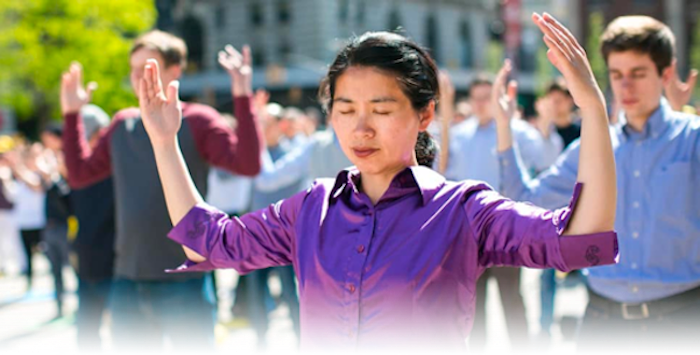

(Minghui.org) On the eve of the Trump-Xi summit, religious freedom groups including the International Religious Freedom (IRF) Summit held a briefing on Chinese Communist Party (CCP) oppression in the US and China at the Museum of the Bible in Washington, DC, on September 16, 2026.
Victims of persecution and representatives from groups including Christians, Falun Gong practitioners, Uyghurs, and Tibetans spoke at the meeting, recounting the CCP’s suppression of freedom of belief, as well as the issue of transnational repression arising from the extension of such persecution overseas.
Sam Brownback, co-chair of the IRF Summit and former US Ambassador-at-Large for International Religious Freedom, emphasized in his opening remarks that the primary objective of the briefing was to place religious freedom and religious oppression that’s taking place in China at the top of the agenda for the summit between the two heads of state.
Former US Ambassador-at-Large for International Religious Freedom: The Trump-Xi Summit Should Address Religious Freedom
Brownback said that the Chinese government is waging a war against faith and religion. He emphasized that the United States can no longer tolerate or accept a regime that harbors hostility toward religion and the United States, and asserted that the US must recognize this as a battle concerning the future of global freedom.
He stated that groups such as the Uyghur Muslims, Tibetan Buddhists, and Falun Gong practitioners have long been subjected to persecution by the CCP and that if China does not cease its persecution of people of faith, the United States should revoke China’s Permanent Normal Trade Relations (PNTR) status.
He also called on President Trump to raise the issue of religious freedom during his talks with Xi Jinping and to demand that China release all individuals imprisoned for their faith.
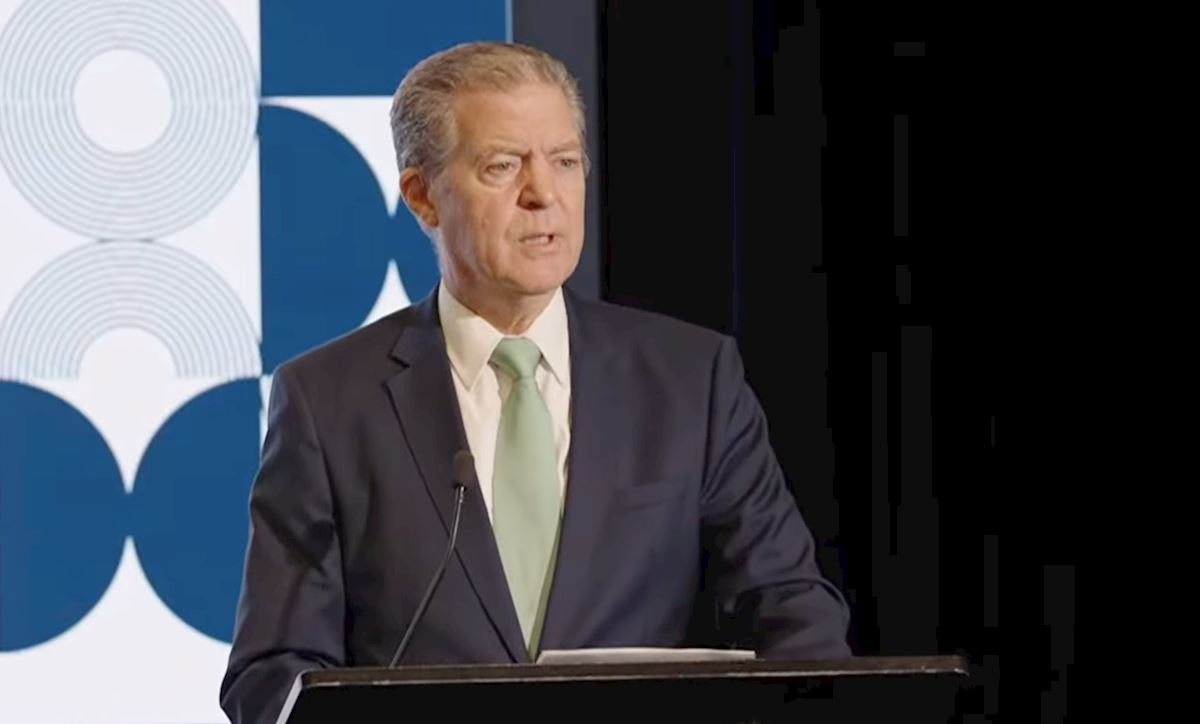 Former U.S. Ambassador-at-Large for International Religious Freedom Sam Brownback speaking at a religious freedom briefing at the Museum of the Bible in Washington, DC, on September 16. (NTD TV/Screenshot Minghui.org)
Believers Recount the Persecution They Suffered in China
At the briefing, several speakers described their personal experiences of being persecuted in Chinese prisons because of their beliefs and how they were tortured.
Pastor Ding Shuqi of the Early Rain Covenant Church in Chengdu City, Sichuan Province, China, recalled that the police launched a massive crackdown on the church several years ago. More than a hundred members were arrested, church property was confiscated, and he himself was detained.
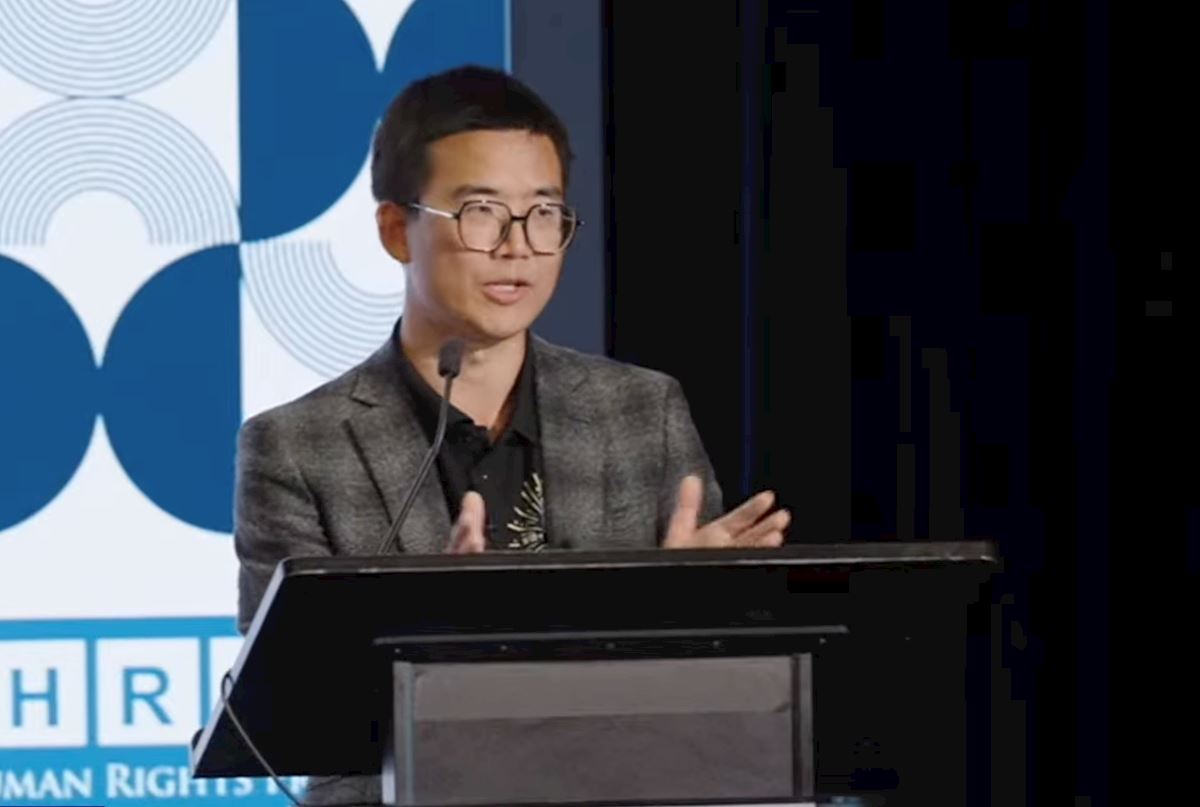 Pastor Ding Shuqi (NTD TV/Screenshot Minghui.org)
Pastor Ding said that, during his five months in a detention center, he was forced to maintain a punitive posture known as “dragon hugging the pillar” for two weeks in a row; he was denied access to his lawyer, family, and the Bible; and he was even forbidden to speak.
He also noted that Chinese house churches lack dedicated church buildings and often meet in members’ homes or rented meeting rooms, yet they face the constant risk of police raids—during which authorities may check identities, interrupt worship services, and take away church members.
William Huang, a Falun Gong practitioner from Pennsylvania, described being imprisoned and mistreated for five years in China for practicing Falun Gong.
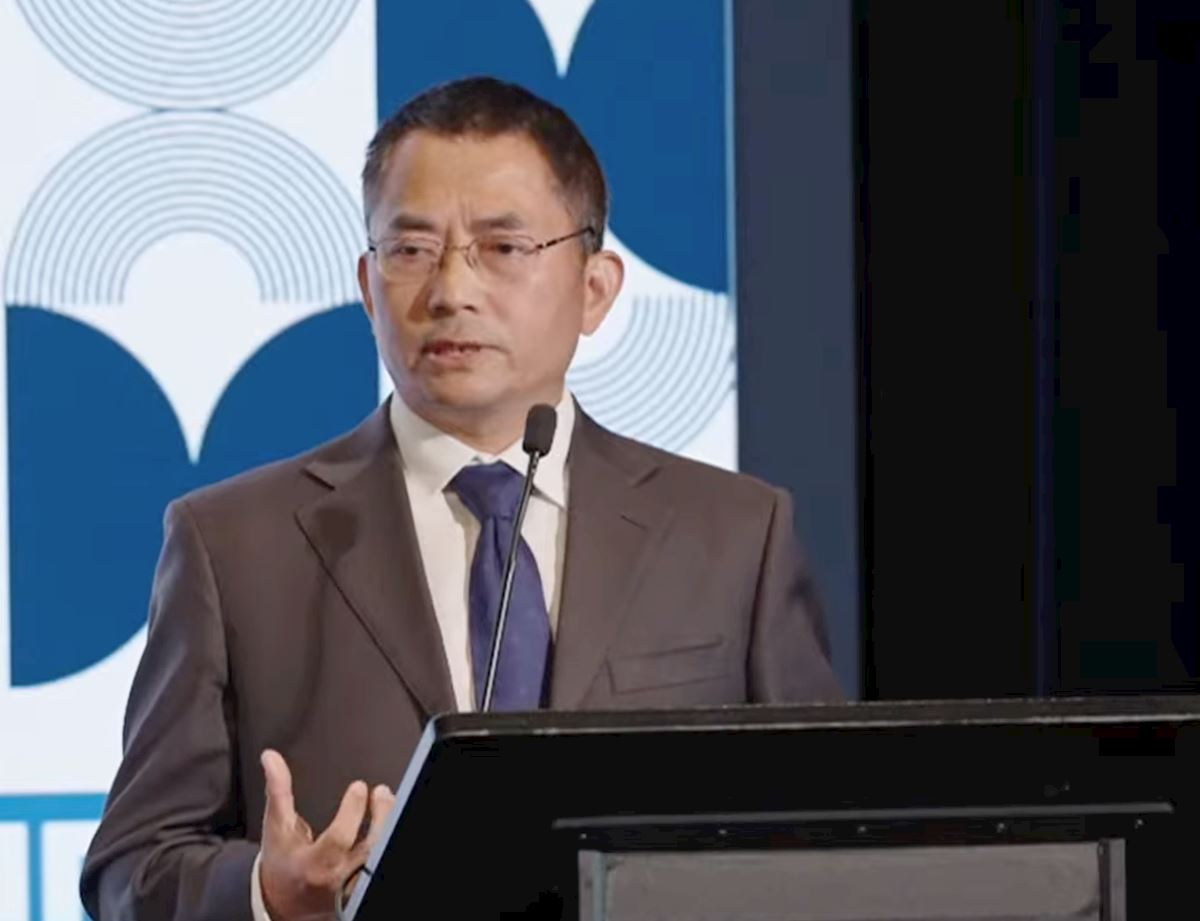 William Huang, a Falun Gong practitioner (NTD TV/Screenshot Minghui.org)
Huang said that he began practicing Falun Gong in 1998 while pursuing his doctorate at Tsinghua University in Beijing. After the Chinese authorities launched the persecution of Falun Gong in July 1999, he was among those detained.
He recalled that he had spent a total of five years in prison. During that time, he was forced to work at least 16 hours a day, sometimes up to 18, no holidays or weekends, manufacturing products such as plastic flowers, Christmas lights, and garments.
When he refused to cooperate, he was handcuffed behind his back and subjected to high-voltage electric shocks delivered by several prison personnel. After a five-day hunger strike, he was forced to remain in a squatting position for hours and was subsequently made to kneel before hundreds of other detainees and admit to being a “criminal.”
Huang also recounted being subjected to “brainwashing” and that he was deprived of sleep for months and forced to watch videos and read materials that defamed Falun Gong.
He was also held in solitary confinement for nearly a year, with contact limited to the seven individuals assigned to monitor him. These individuals recorded his words and actions every day and reported them to the guards. Authorities also arrested his parents who practice Falun Gong in an attempt to force him to renounce his belief.
From Domestic Persecution to Transnational Repression
The briefing also focused on the issue of transnational repression by the Chinese government, which exerts pressure on individuals who live outside of China and their families.
Uyghur-American human rights advocate Ziba Murat recounted the experience of her mother, Gulshan Abbas, who has been detained by Chinese authorities for over eight years.
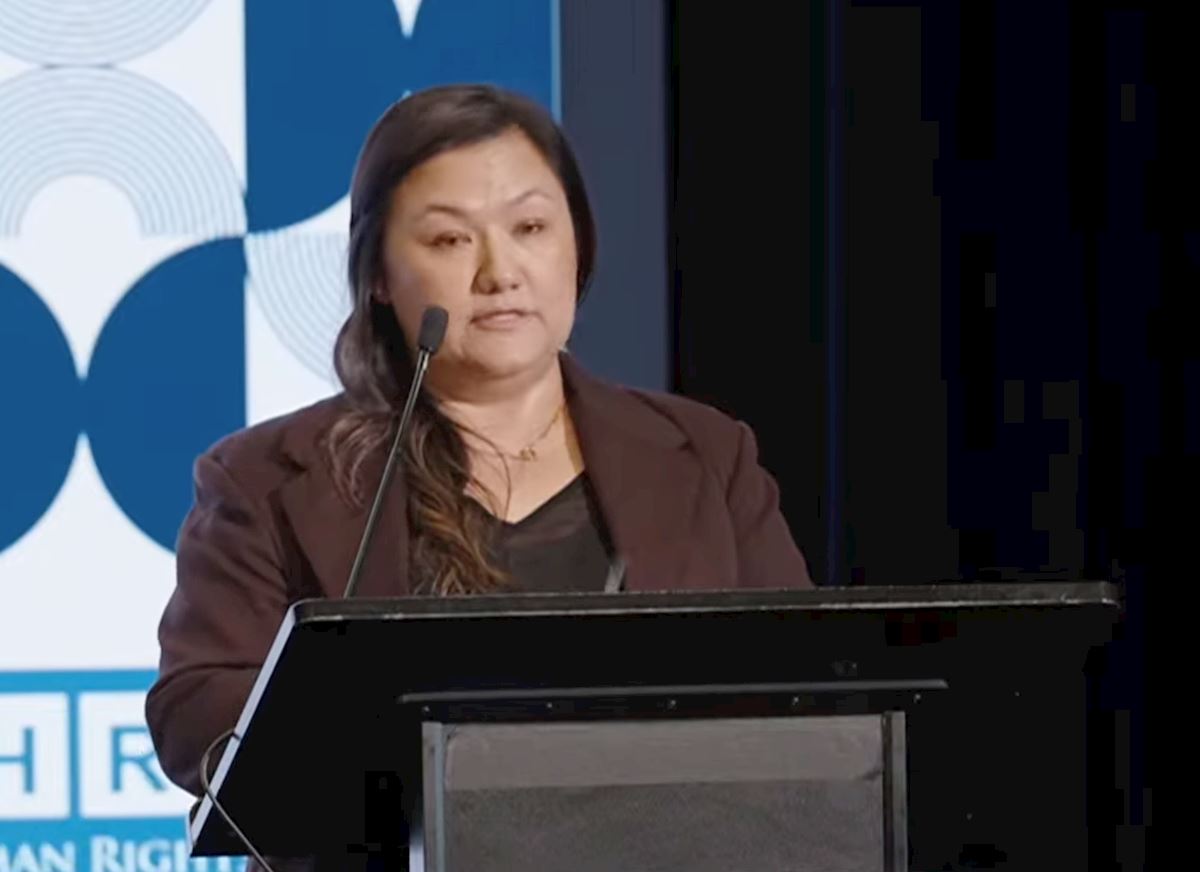 Ziba Murat calling on the CCP to release her mother (NTD TV/Screenshot Minghui.org)
Murat said her mother is a retired doctor in China. In September 2018, her aunt, a US citizen, spoke at the Hudson Institute in Washington about the persecution of Uyghurs in Xinjiang. Six days later, Abbas disappeared.
Murat later learned that her mother had been sentenced to 20 years in prison following a secret trial. She remains in custody in China. She believes her mother’s detention was retaliation for her aunt speaking out publicly in the United States and that it demonstrates how the CCP’s repression affects individuals within the US and their families.
Steve Lance, executive producer and host of the Capital Report program on NTD (an English-language television network) and investigative journalist, said that transnational repression involves more than just violence and direct physical threats; at times, such suppression takes more covert forms. Since the early 2000s, the CCP Central Committee and Central Military Commission approved the “Three Warfares” strategy: “Public opinion warfare (media warfare), legal warfare, and psychological warfare.”
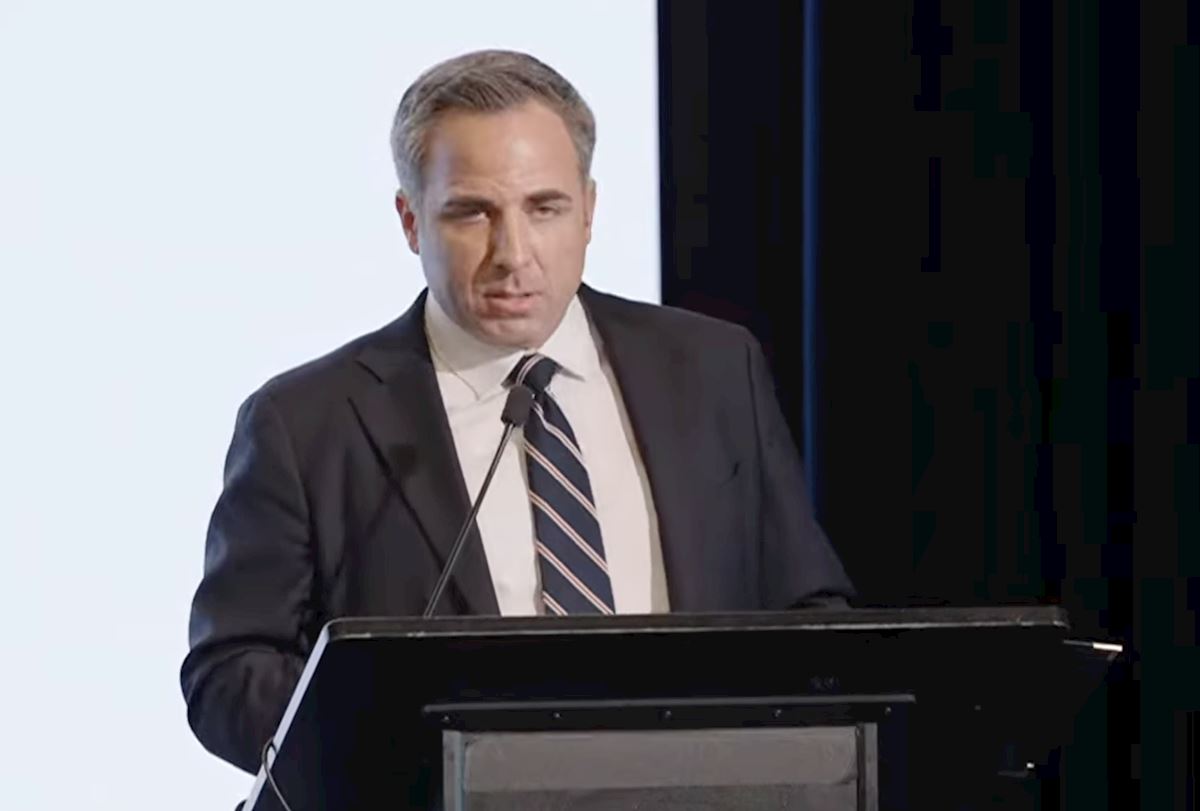 Investigative journalist Steve Lance addresses the briefing. (NTD TV/Screenshot Minghui.org)
Lance said that, over the past two years, his team identified a pattern while investigating the suppression of Falun Gong and Shen Yun Performing Arts, a group founded by Falun Gong practitioners. He said that internal Chinese government documents obtained by the investigative team reveal that Shen Yun and Falun Gong were designated as targets for a crackdown employing the three warfares mentioned above.
He believes the greatest challenge facing the US federal government is the lack of a unified mechanism to “connect the dots:” While lawsuits are handled by the courts, labor complaints by oversight agencies, and domenstic threats by the FBI, the CCP operates by executing a comprehensive strategy across a macro-level chessboard. The US government must establish an inter-agency mechanism to gain a holistic view of the situation and prevent its robust democratic institutions from inadvertently becoming tools for the CCP’s transnational repression.
“Who Decides the Future of Believers?”
Ryan Fioresi, Executive Director of the International Campaign for Tibet (ICT), recounted the plight of two young Tibetans who wanted to become monks. According to a recent report, due to restrictions on religious activities, the two were forced to hide in a monastery. They fled when police arrived to detain them and ultimately drowned.
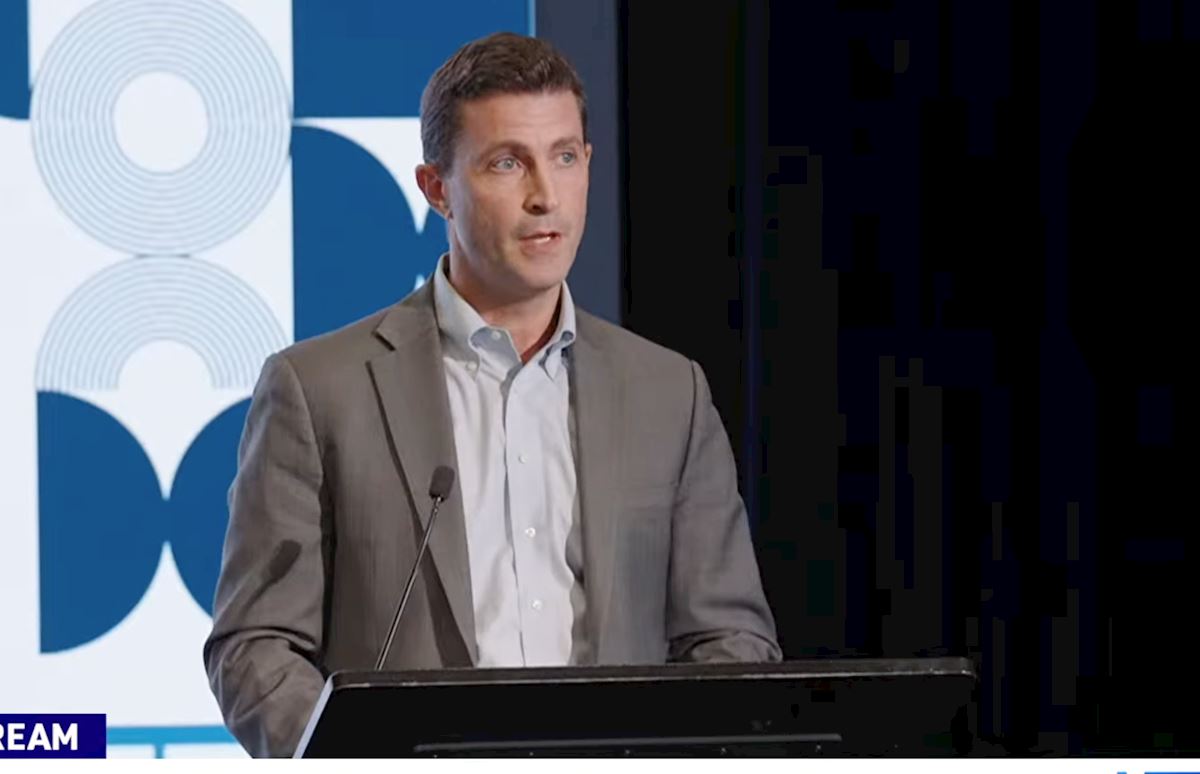 Ryan Fioresi (NTD TV/Screenshot Minghui.org)
“Who decides whether a young Tibetan may become a monk? Who decides what a monastery will teach, which religious leaders Tibetans may follow? And in the end, who decides the future of Tibetan Buddhism?” Fioresi said that religious freedom means these choices should belong to the believers themselves.
Faith Groups Call for an End to the Persecution
David Trimble, representing the Association for Religious Freedom, noted that people from diverse religious and faith traditions had gathered on that day to speak out because religious freedom concerns the fundamental right of every individual to live in accordance with their own beliefs.
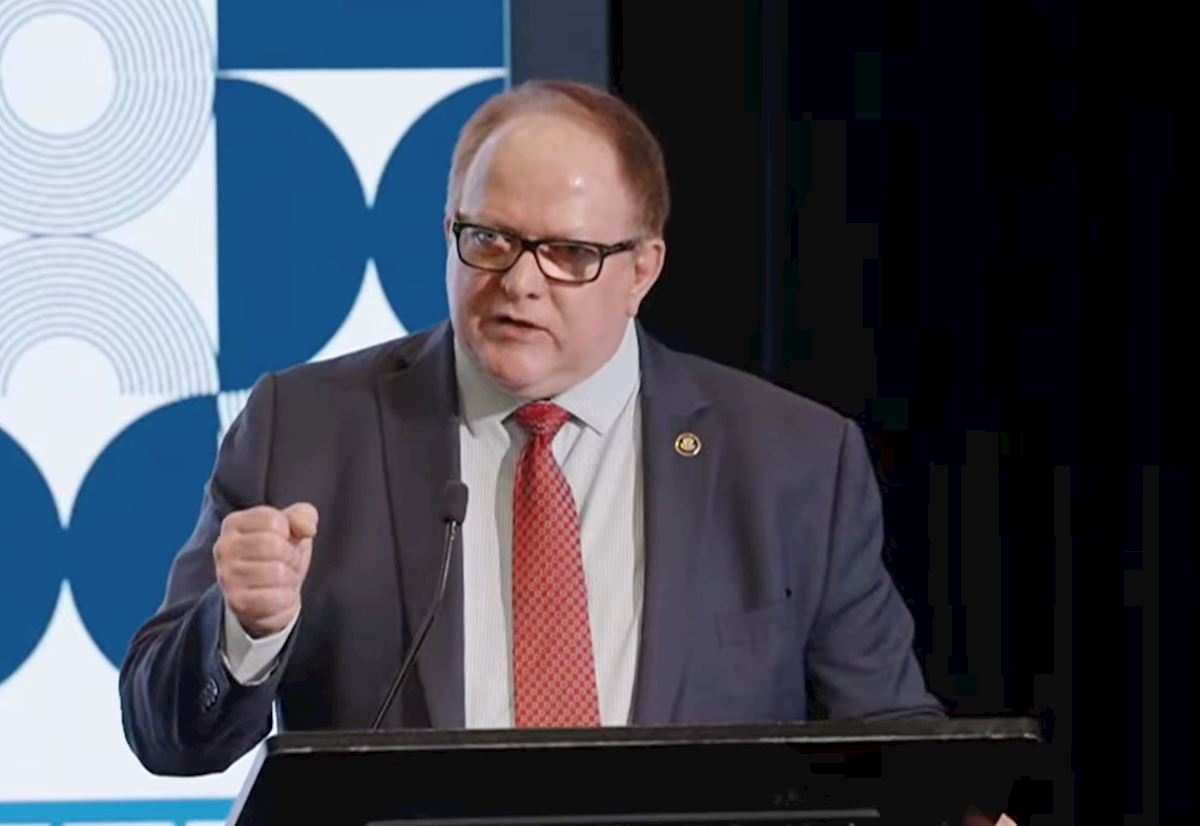 David Trimble speaks at the briefing. (NTD TV/Screenshot Minghui.org)
Trimble called on diverse groups—including Christians, Catholics, Tibetan Buddhists, Falun Gong practitioners, and Uyghurs—to speak out collectively in defense of freedom of religion and belief.
Participants also called on President Trump to raise the issue of the Chinese authorities’ persecution of religious beliefs during his talks with Xi Jinping and urge the CCP to release individuals detained for their faith.
All content published on this website is copyrighted by Minghui.org. Minghui will produce compilations of its online content regularly and on special occasions.