
(Minghui.org) I first heard about Falun Gong when I was in the fourth grade. I found an unlabeled VCD in the newspaper box. Out of curiosity, I played it. The disc contained footage of the Tiananmen Square self-immolation incident. Since I was still quite young, I just watched it without really understanding or forming any impression, and I didn’t give it much thought afterward.
The Chinese Communist Party’s (CCP) media was flooded with negative propaganda about Falun Gong. Under the onslaught of this prolonged, one-sided indoctrination, most people were against Falun Gong, and I was no exception.
Looking back, I realize those thoughts weren’t from independent thinking, but were shaped by public opinion. Faith should be a matter of personal freedom, but at the time, I lacked the ability to discern the truth.
Growing up in China, the notion that “loving one’s country” is synonymous with “loving the Party” was constantly reinforced. Patriotic education permeated many subjects, including Chinese language, history, and politics, emphasizing obedience and ideological conformity and did not encourage students to think independently.
I grew up in the CCP’s educational system, and I believed everything in the CCP’s textbooks and media. Like other Chinese, I thought China was powerful and the outside world was hostile. This perception wasn’t from personal choice, but due to long-term indoctrination by the CCP.
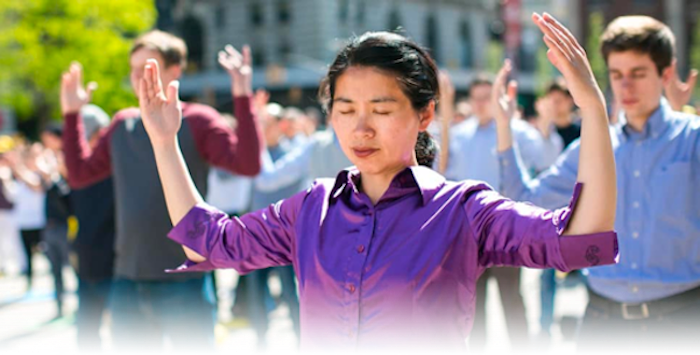
After I graduated, I went abroad to study and, for the first time, saw Falun Gong practitioners parading peacefully. This was in stark contrast to what I had been led to believe—this group was portrayed in China as “illegal” and “dangerous.” Practitioners outside of China were able to openly and peacefully express their views.
Later, by a stroke of luck, I met a Falun Gong practitioner. Initially, I still felt some resistance, due to the years of propaganda I was exposed to. After listening to this practitioner’s patient explanations, I gradually realized that Falun Gong was completely different from what I’d been led to believe.
I began exploring and studying Falun Gong. At the time, I was under a lot of pressure academically and felt anxious and stressed, but as I studied the Fa and practiced the five exercises, I unexpectedly felt a long-lost sense of peace, and my stress was noticeably reduced. For the first time, I gained a completely new understanding of Falun Gong through my own personal experience.
I moved to Toronto, Canada, and got to know a veteran practitioner, Dai. Due to personal circumstances, my cultivation was sporadic, but Dai patiently guided me through studying and reflecting on the Fa and offered many kind reminders and suggestions.
She looked after me like an older sister and helped me gradually understand the importance of looking inward and cultivating my character. Through her, I met other practitioners, and we all encouraged and supported each other in our cultivation.
Looking back, I fully realize that the shift in my understanding of the world before and after studying abroad didn’t happen overnight, but came about gradually through constant comparison, reflection, and personal experience.
Certain beliefs I once firmly held were dismantled one by one, as I encountered authentic information and historical truths. The psychological impact of this experience was profound, compelling me to fundamentally re-examine the basis of my past understandings.
As someone who grew up in an environment dominated by a single narrative, I am keenly aware that changing deeply ingrained notions is not easy. This is why I cherish the opportunity I now have to view history rationally and to think about issues independently.
Practicing Falun Dafa not only benefited my mind and body, but also taught me to maintain clarity and compassion in today’s complex world.